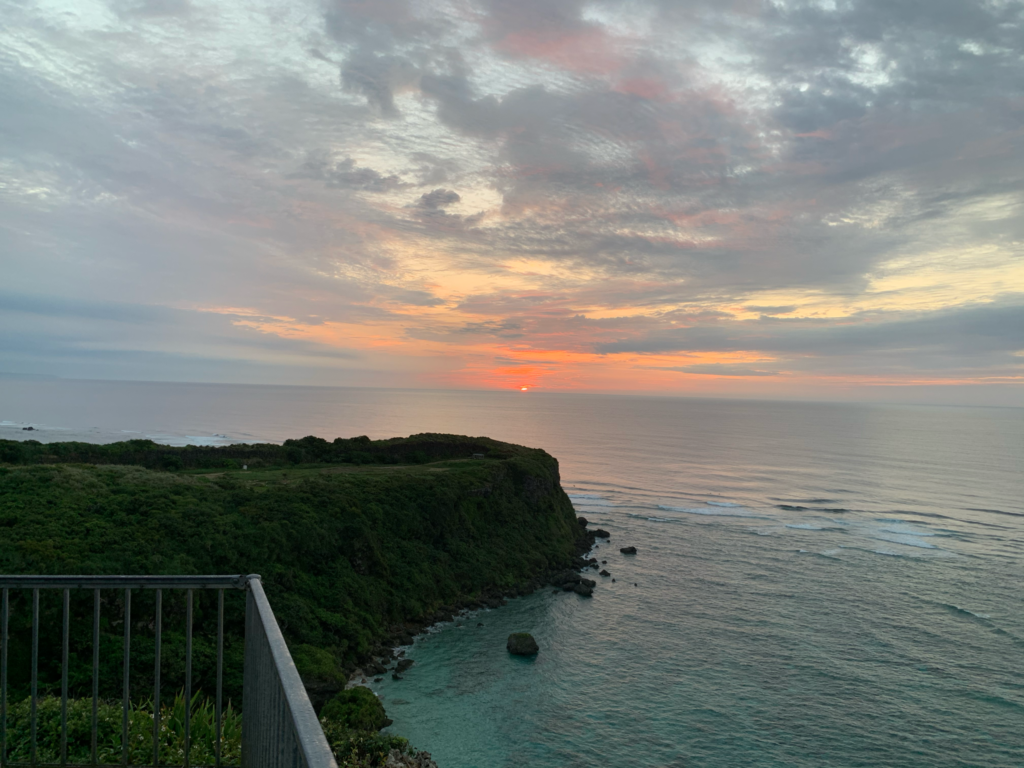
Planning to surf in Okinawa? Good call. The water is warm, the reefs are beautiful, and with the right spot you can find a rideable wave almost any day of the year.
But Okinawa is not like surfing a beach break in Chiba, California or the Gold Coast. Almost every wave here breaks over shallow coral reef, and the tide decides whether you surf at all. Show up at the wrong hour and you will be staring at dry reef.
I live in Okinawa and surf here year-round. This guide is the overview I wish someone had given me first: how the tide works, the main spots with parking and entry notes, when to come, and the basics of staying safe and getting along in the lineup.
Quick Answers Before You Go
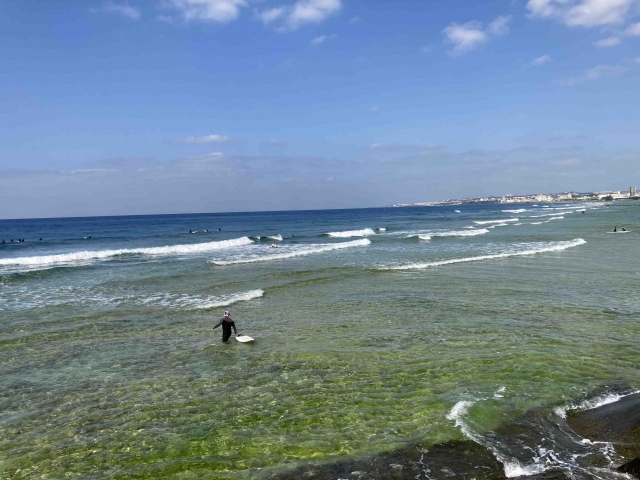
- Wave type: Almost all reef breaks. Reef booties are strongly recommended, especially for beginners.
- When you can surf: Roughly two hours either side of high tide. At low tide the reef is exposed.
- Best season: Winter for consistent waves on the west coast. Late summer and autumn for typhoon swell.
- Easiest spot for visitors: Sunabe Seawall in Chatan, with surf shops, lessons and rentals nearby.
- Closest to Naha Airport: Suicide Cliffs in Itoman, about 30 minutes by car.
- Wetsuit: A 3mm full suit is enough for the coldest months. Summer is boardshorts and a rashguard.
- Getting around: You need a car. The spots are spread out and public transport will not get you there with a board.
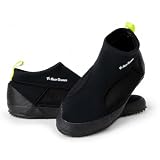
[リーフツアラー] 【Amazon.co.jp 限定】 (REEF TOURER) シュノーケリングにも フィンガード付 マリンシューズ 大人用 25cm ブラック RBW3041P

The Golden Rule of Okinawa Surfing: Check the Tide First
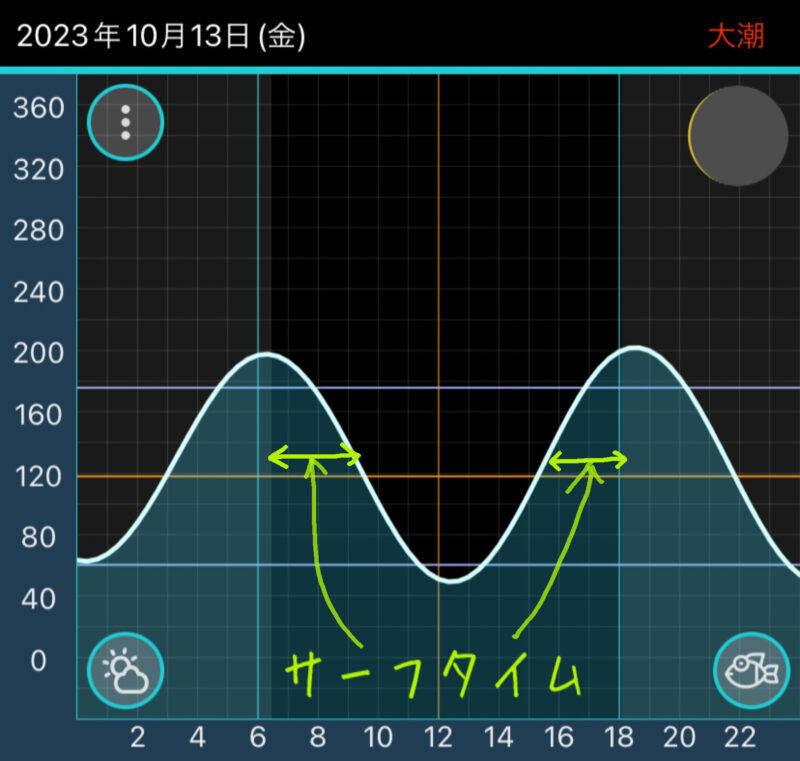
Everywhere else you check the swell first. In Okinawa you check the tide first.
The reefs here are shallow. At low tide the coral is out of the water or just under it, and surfing is impossible or dangerous. The usable window at most spots is about two hours before high tide to two hours after.
My personal rule of thumb is a tide height of around 120 cm or more, though this changes with the spot and the size of the swell. That number is the height on the Naha tide graph, which is the standard reference for the main island. Some tide sites show it in metres, so 120 cm appears as 1.2 m. A bigger swell needs more water over the reef, not less.
What this means for your day:
- You cannot surf at the same time every day. The window moves with the tide.
- During spring tides the high tide often falls near sunrise and sunset, which gives you an early session and an evening session.
- Plan sightseeing, meals and driving around the tide, not the other way round.
Look up the tide graph for Naha before every session. I use the Naha tide graph on tide.is. The Japan Meteorological Agency publishes tide tables, and most surf forecast apps show tide height for Okinawa spots.
Okinawa Surf Spots for Visitors
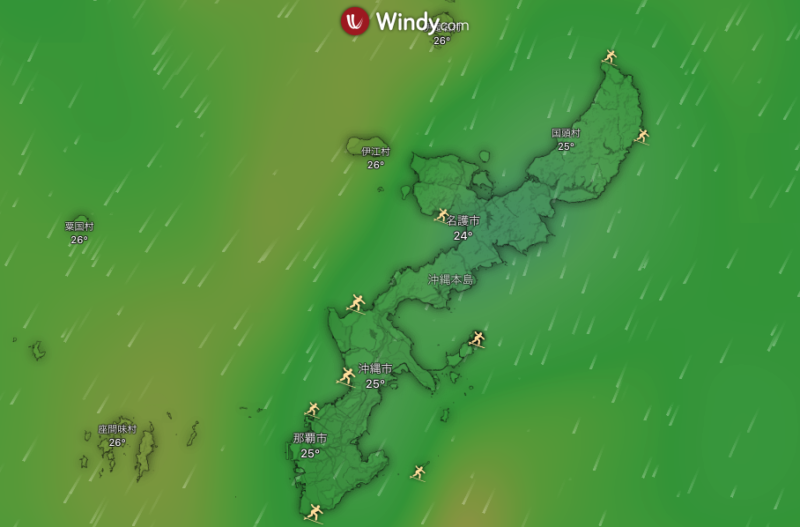
Okinawa has far more surf spots than the ones below. I am only covering spots that are already well known to visiting surfers. For anything else, ask a local surf shop or book a surf guide. That is how it works here, and it is the respectful way to do it.
| Spot | Area | Level | Parking | Getting in |
|---|---|---|---|---|
| Sunabe Seawall | Chatan (central, west) | Beginner to advanced | Free, along the seawall | Steps down the seawall, short paddle |
| Suicide Cliffs | Itoman (south) | Intermediate and up | Roadside spaces along the coast road | Easy entry, very sharp reef |
| Maeda Point | Onna (central, west) | Intermediate | Paid car park at Cape Maeda | From the beach |
| Hedo Point | Kunigami (far north) | Experienced | Available, remote | Shallow reef, few people around |
| Ikei Island | Uruma (east) | Not recommended for visitors | Restricted | Long paddle, strong current |
1. Sunabe Seawall (Chatan)
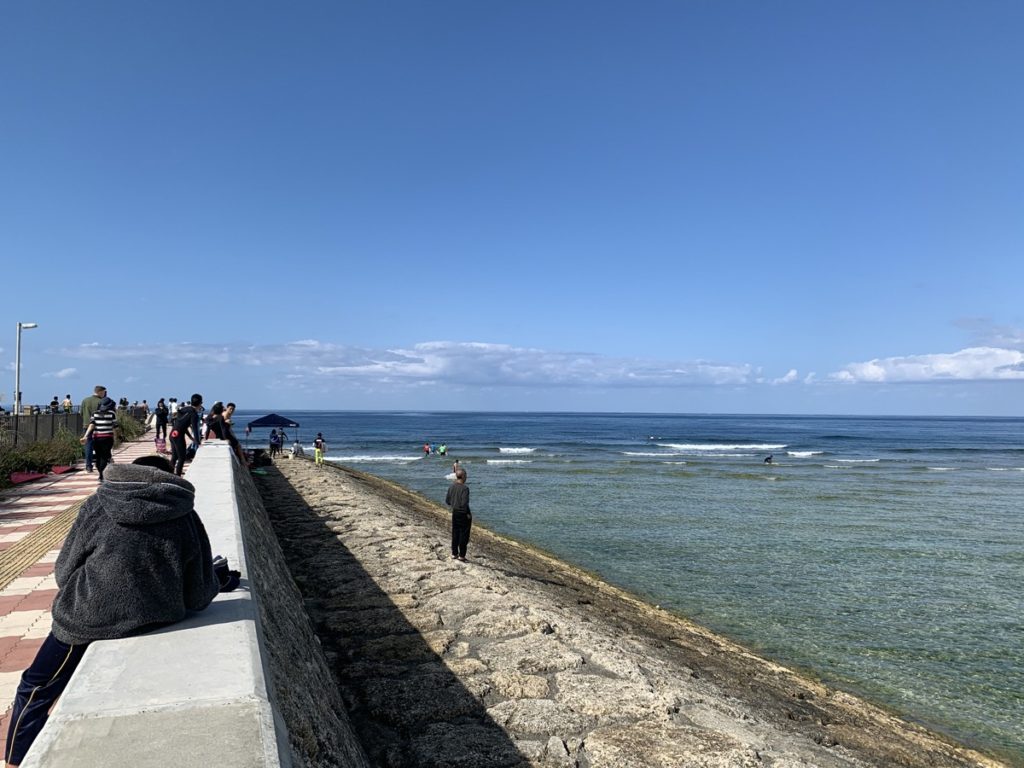
The most famous surf spot in Okinawa and the best place to start. Locals also call the area Miyagi Coast. The seawall runs along several separate peaks, which English-speaking surfers know by names like Bowls, California, Hawaiians and Hotels.
- Level: Beginner to advanced, depending on the peak and the size.
- Parking: Free parking along the seafront. On a good day it fills up completely, so arrive early and never block driveways or access points.
- Entry and exit: Steps are built into the seawall, so getting in and out is easy. The lineup is close to shore and the paddle is short.
- Beginners: Head for the corner near Baba Park. On a small day you can stand on the bottom in most of the area. It is still reef, so wear booties.
- Facilities: Several surf shops nearby offer lessons, guiding and board rental. Cafes and restaurants line the seawall.
- Crowd: One of the busiest spots on the island. Many American surfers from the nearby bases surf here, so English is commonly heard in the water.
- Season: Best in winter. From about May to August it is flat more often than not.
One warning: when a typhoon or strong groundswell hits, Sunabe turns into a serious wave with strong currents. If you are a beginner and it looks big, do not paddle out. Watching from the seawall is a great show on its own.
Stay for the sunset. It drops straight into the sea in front of the lineup.
2. Suicide Cliffs (Itoman)
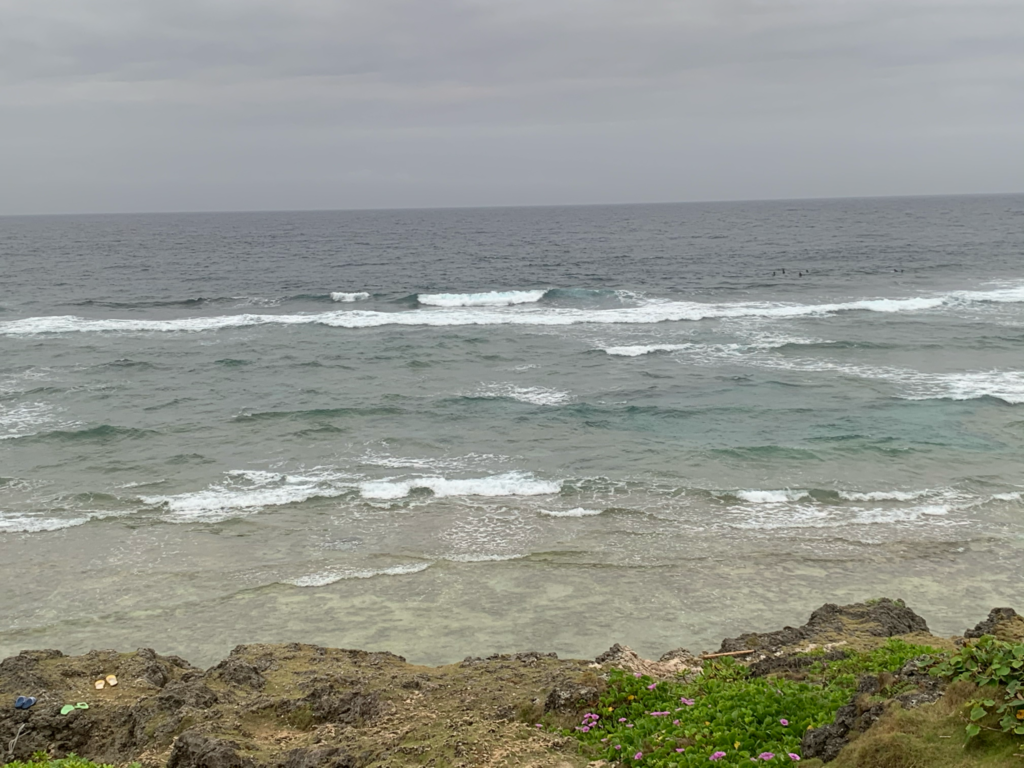
Known locally as Suicide Point or Komesu Coast, this is the most consistent spot on the island. There is some swell here most of the year, and peaks are spread along the whole stretch of coast.
- Level: Intermediate and up.
- Access: About 30 minutes by car from Naha Airport, which makes it the first stop for many surf trips.
- Parking: There are spaces to park along the coast road. Park neatly and leave room for others.
- Entry and exit: Getting in is easy, but the reef is sharp and jagged. Of all the spots I surf, this is the one that hurts my feet the most. Beginners should wear reef booties.
- Crowd: On a good weekend there are, as I like to say, more people than fish.
- Watch out: When a typhoon approaches, the size jumps quickly and the whole place closes out.
This area saw some of the heaviest fighting in the Battle of Okinawa, and there are war memorials nearby. Please be quiet and respectful in the parking area and on the paths.
3. Maeda Point (Onna)
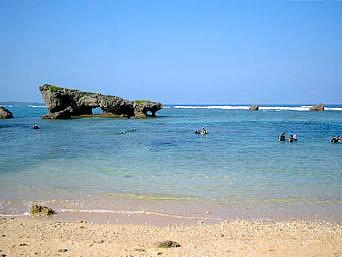
Maeda Point sits next to Cape Maeda, home of the famous Blue Cave dive and snorkel site. On flat days the cape is full of divers and tourists. When swell arrives, surfers take over.
- Level: Intermediate. In my experience this is where you find the most hollow waves on this list.
- Parking: Use the paid car park at Cape Maeda. The posted hours are 7:00 to 19:00, so check the gate times before a dawn or dusk session. It is also busy with divers.
- Entry and exit: You can walk in from the beach, which makes it relatively easy. Be careful when the current is running. It can be fast here, and the wave gets hollow quickly.
- Facilities: Showers and lockers on site, open 7:00 to 18:30. A shower after surfing is a rare luxury in Okinawa.
4. Hedo Point (Ko Chan)
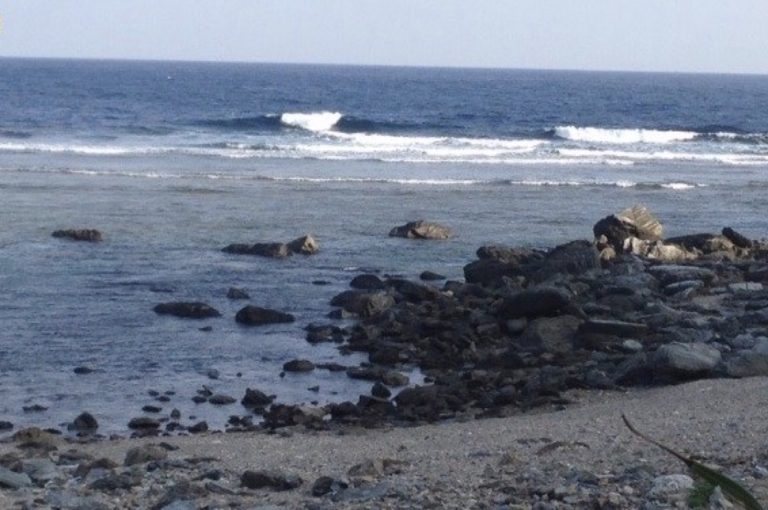
At the far northern tip of the main island, about two and a half hours by car from Naha Airport. Local surfers call it Kochan Point. This is where we drive when nothing in the central and southern areas is working.
- Level: Experienced surfers only. The water over the reef is shallow.
- Parking: You can park, but the area is remote and there are few people around. That makes it a hard place for a first visit or for beginners. If something goes wrong, help is far away.
- Reward: Some of the clearest water and best scenery on the main island, and on a lucky day you may have it nearly to yourself.
- Tip: Go with someone who knows the spot. Bring food, water and a full tank.
A note on Ikei Island
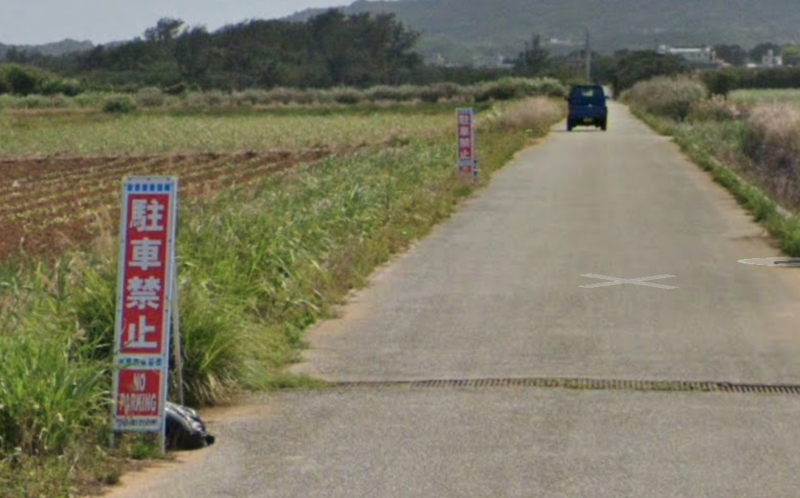
Other guides list Ikei Island, on the east coast across the Kaichu Doro sea road, as a spot for visitors. I do not recommend it right now.
- Parking is currently restricted. Even local surfers are holding back. The places where you can legally park, such as the fishing port, are a long walk from the break.
- The paddle is long. The wave breaks around 80 m from the beach.
- The current is strong. This is not a place for beginners. In February 2021 a surfer in his 20s went missing here and was later found on the seabed offshore, according to the Okinawa Times.
If you are an experienced surfer and still want to go, go with a local guide and follow their lead on parking.
When to Surf in Okinawa: Seasons and Water Temperature
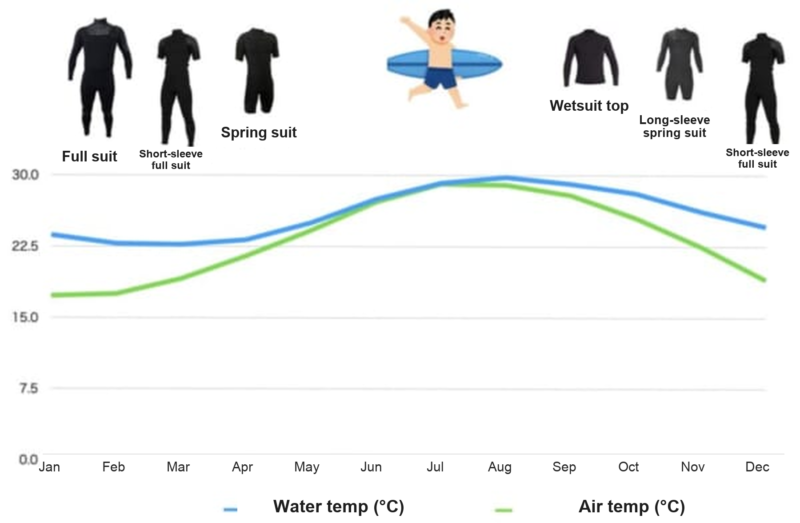
Because Okinawa is an island, there is nearly always a coast facing the swell with the wind blowing offshore. By moving between spots, I can find something surfable about six days a week. Whether it suits your level is another question.
| Season | Waves | Water (approx.) | What to wear |
|---|---|---|---|
| December to March | Most consistent time of year. West coast spots such as Sunabe are at their best. | About 21 to 23°C | 3mm full suit |
| April to May | Smaller and less consistent. | About 23 to 26°C | Spring suit or wetsuit top |
| June to August | West coast is often flat. Typhoon swell is possible later in summer. | About 27 to 29°C | Boardshorts or swimsuit with a rashguard |
| September to November | Typhoon swell season. The most powerful waves of the year. | About 25 to 28°C | Rashguard, moving to a wetsuit top by late November |
Water temperatures are rough averages and vary from year to year.
Summer is the popular choice because you can surf in boardshorts in clear blue water. But winter has more good days and fewer people. I start wearing a wetsuit when the water drops below about 25°C, which for most people means late November to April.
Staying Safe: The Short Version
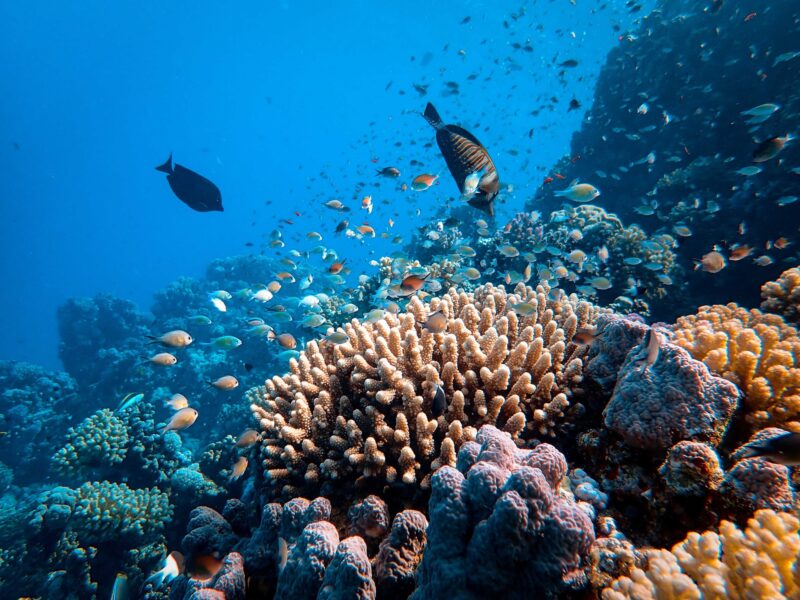
- The reef is the number one cause of injury. Wear booties, fall flat, and know your way in and out before you paddle.
- Jellyfish are a real risk. Okinawa Prefecture issues a habu jellyfish advisory for June to September, but I have been stung in January. Cover your skin.
- Chinkui is the local name for tiny larvae that cause prickling and an itchy rash. A tight rashguard helps.
- Currents get much stronger with typhoon swell. If you are unsure, do not go out. If you feel scared, go in.
- Vinegar helps with habu jellyfish stings but should not be used on Portuguese man o’ war stings. Keep a small bottle in the car and know the difference.
For the full details, including first aid, see Okinawa Surf Hazards: Jellyfish, Sea Lice, Reef Cuts & Currents.
Emergency numbers in Japan: 119 for ambulance and fire, 118 for the Japan Coast Guard, 110 for police.
Lineup Etiquette: The Short Version
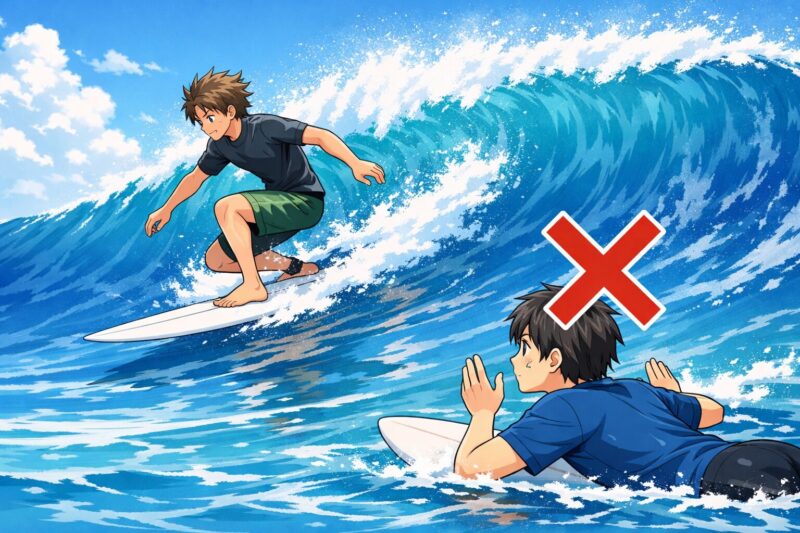
Every spot in Okinawa has its local surfers. In my experience, if you follow the basic rules you will have no problems.
- Do not drop in. The surfer closest to the peak has priority.
- Share the peak. Okinawan waves break in the same place over the reef every time, so everyone gathers at one take-off spot. That only works if people take turns. Do not sit deepest and take every set.
- Say hello. A nod and a simple “konnichiwa” when you paddle out changes how you are received.
- Park properly, keep noise down, take your rubbish home.
- Respect Obon. During the three days of Okinawan Obon in late summer, many locals stay out of the sea. I suggest you do the same.
Lessons, Rentals and Getting Around
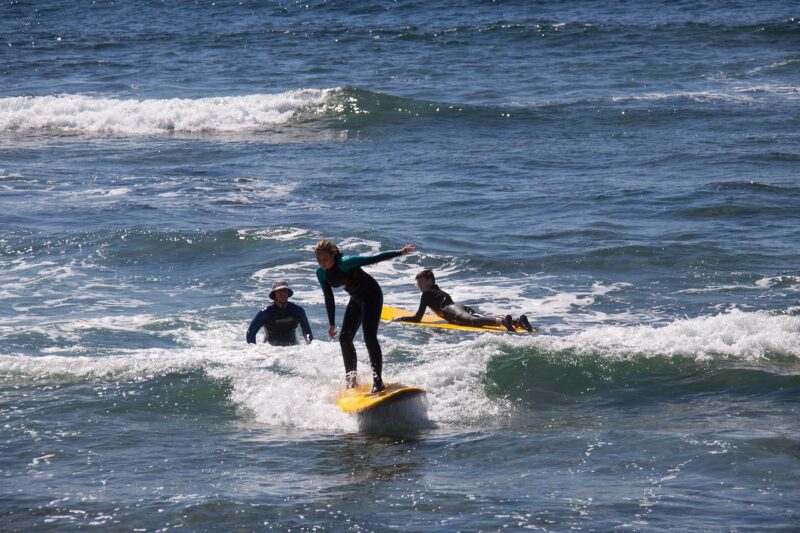
Beginners: Book a lesson. It is the best value and the safest choice. Schools around Sunabe provide the board, wetsuit or rashguard, and booties, and the instructor chooses the right peak and the right tide for you. Several schools offer lessons in English. Expect to pay very roughly 9,000 to 10,000 yen with everything included. Lesson times follow the tide, so you may start early in the morning or late in the afternoon.
Experienced surfers: Surf shops around Sunabe rent boards and wetsuits. Budget around 10,000 yen for a full set. Ask the shop which spot is working today and when the tide window is. That advice is worth more than the board.
Transport: Rent a car, and check that your board fits inside before you book. Rough driving times from Naha Airport:
- Suicide Cliffs: about 30 minutes
- Sunabe Seawall: about 45 minutes to an hour, depending on traffic
- Hedo Point: about two and a half hours
Summary
| Question | Short answer |
|---|---|
| When can I surf? | About two hours either side of high tide |
| Best season? | Winter for consistency, autumn for typhoon swell |
| Best spot for a first visit? | Sunabe Seawall |
| Most consistent spot? | Suicide Cliffs |
| Biggest hazard? | The reef, followed by jellyfish |
| Wetsuit? | 3mm full suit in winter, rashguard in summer |
| Golden rule? | Check the tide, share the peak, and go in if you are scared |
Okinawa rewards surfers who plan around the tide and treat the reef and the locals with respect. Get those right and you will be surfing clear, warm water with a view you will not forget.
See you in the water.

コメント