The Blue Cave at Cape Maeda is one of the most popular snorkel and dive sites in Okinawa. Most Americans on the island know the place as Maeda Point.
I surf at the beach next door. On flat days I bring a mask and snorkel instead of a board.
This guide covers what a tour listing usually leaves out: when the cave is really open, how to check before you drive, how the parking and showers work, and whether you need a tour at all.
This page contains affiliate links. Buying or booking through them supports this blog at no extra cost to you.
The Blue Cave at a Glance
What the Blue Cave Is
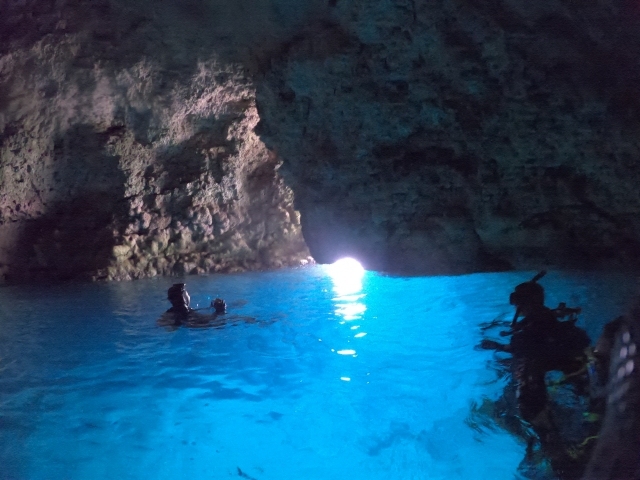
The Blue Cave is a sea cave in the cliff at Cape Maeda, in Onna Village on the west coast. You reach it through the water. Most people swim in from the stairs at the cape, and some tours go by boat.
- Why it glows. Sunlight comes in through the water at the mouth of the cave, reflects off the pale sand on the bottom and lights the water from below. On a sunny day the surface inside turns a bright, electric blue.
- The cave is small. You swim in, float for a few minutes and swim back out.
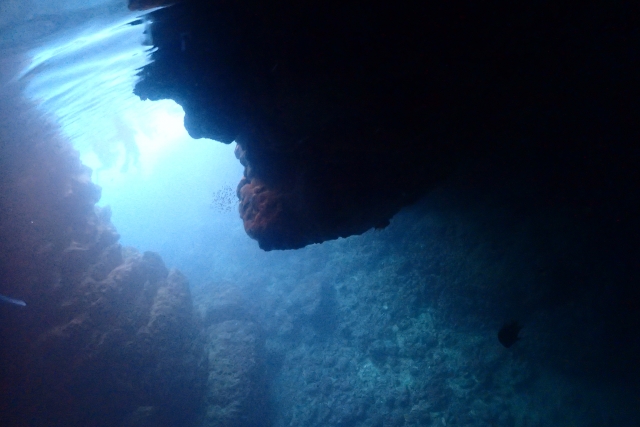
- The reef outside is the other half. Fish gather around the cave in big numbers. If you have fish food, you only have to hold it in your hand and they come to you. For a lot of people that is the best part.
Is It Open Today?
This is the question that matters most, and the answer changes every day.
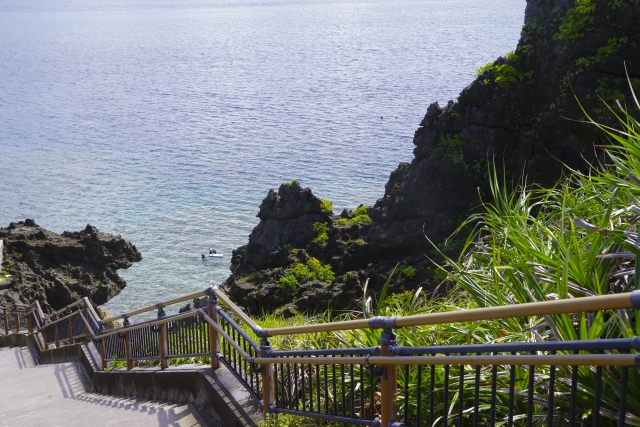
The stairs down to the water are run by the Cape Maeda management office. When the sea is rough, the office closes the stairs and nobody goes in from the cape.
- Check before you drive. The cape posts the current status on its sea status page. The page is in Japanese, but the color tells you what you need to know.
- Watch the live camera. The same page links to a live YouTube stream of the water in front of the cape.
- Look at the flag when you arrive. The status can change during the day.
If you are in the US military, also check the sea condition for the west coast on Kadena’s Local Weather page. The flag at the cape and the military sea condition are two separate systems, so check both.
How to guess tomorrow
You can often tell the night before. This is how a surfer reads it.
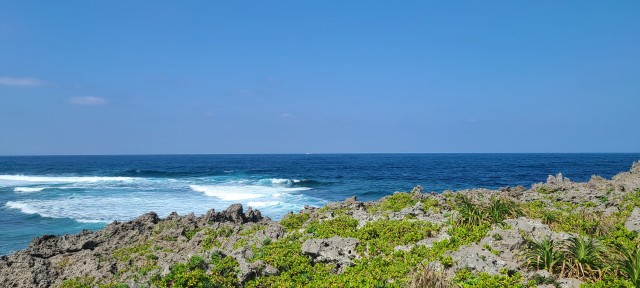
- Wind from the north: expect it to be closed. North wind pushes waves onto the cape.
- Wind from the south or southeast: your best chance. The sea in front of the cape is usually calmer.
- A typhoon can close it under a blue sky. A storm far away sends swell for days, even when the weather here looks perfect.
- Winter is the hard season. From about October to March, the usual wind in Okinawa is from the north. One tour operator says the cave is often closed from November to February.
To see the wind for tomorrow, I use the Windy app. I explain how in How to Read the Surf Forecast in Okinawa.
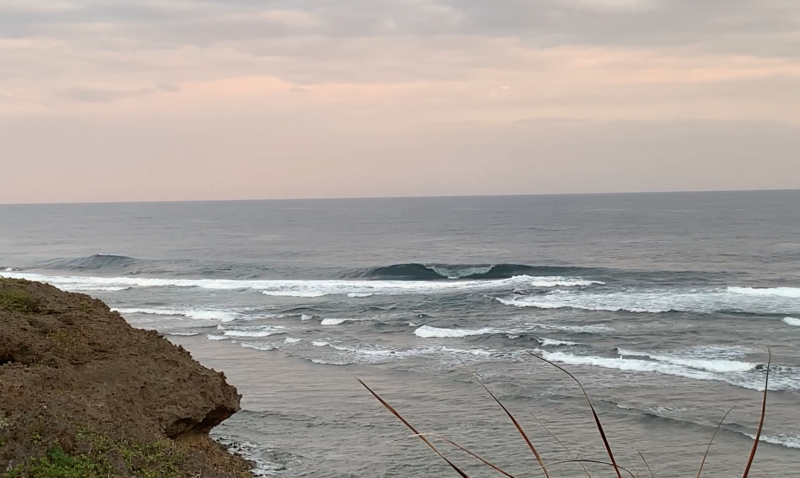
It is the opposite of surfing. The north swell that closes the Blue Cave is the same swell that brings waves to the surf spot next door. I cover that side in my Maeda Point Surf Guide.
Tour or On Your Own?
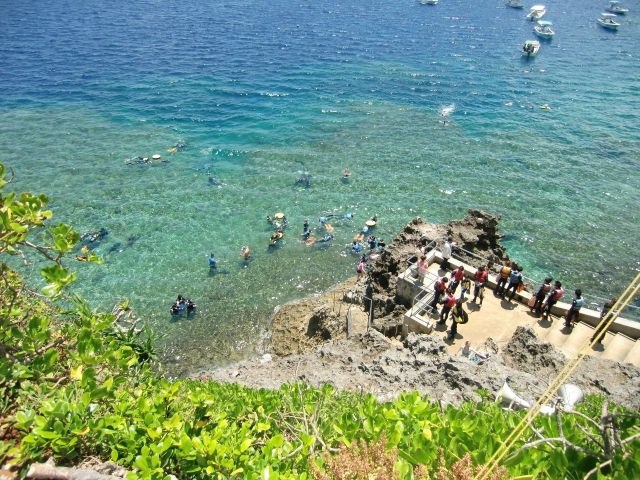
My advice is simple. If it is your first time here, take a tour.
The water in Okinawa looks gentle, and it is not. According to the Japan Coast Guard’s regional headquarters, 107 people were involved in marine leisure accidents in Okinawa in 2025, counted up to December 3. Of those, 29 died or went missing, and about 70 percent were tourists. Okinawa Prefecture says snorkeling is the activity with the most accidents. It asks everyone to wear a life jacket and never to go alone.
A guide knows where the cave is, how the current runs that day, and when to turn around.
Tours Worth a Look
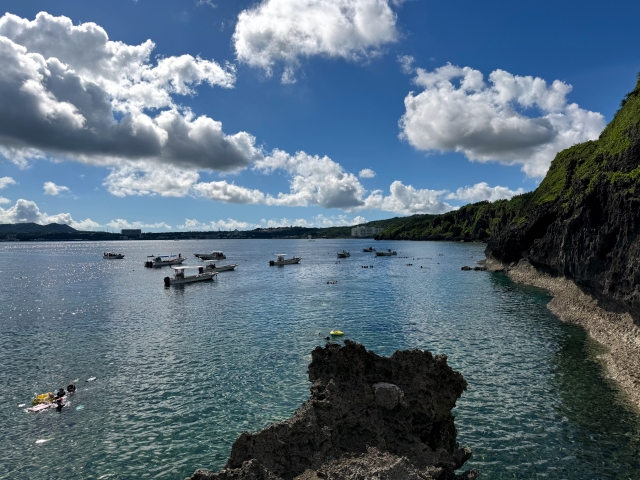
I picked these on GetYourGuide for three things: strong reviews, guides who speak English, and a clear policy for days when the cave is closed.
- All four offered free cancellation up to 24 hours before, at the time of writing.
- Read the “Not suitable for” list before you book. Most tours exclude pregnancy, heart conditions and high blood pressure, and each one has its own age and weight limits.
- In summer, book an early slot. The cape gets very crowded, and one operator starts at 7 a.m. to get ahead of it.
- In winter, expect a plan B. When the cave is closed, these tours move to another snorkel spot or give you the choice of a refund.
You can also see every Blue Cave tour on GetYourGuide.
Going on Your Own
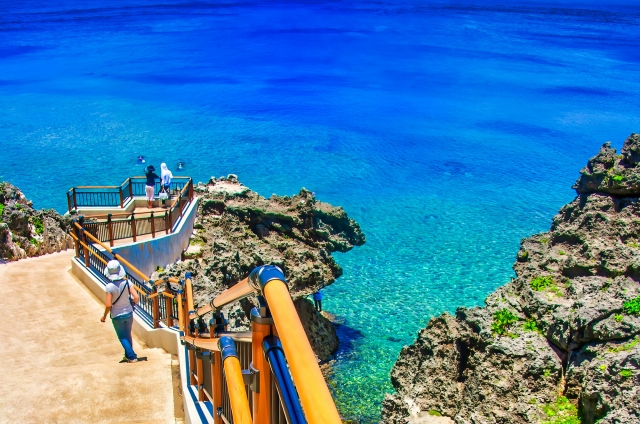
If you know the spot and the sea is calm, you can do this yourself. These are the rules.
- Wear a life jacket or a flotation belt. The cape’s official site asks everyone who snorkels to wear one. You will see people without them, but if it is your first time, wear one.
- Go with a buddy. Never alone.
- Stay out when the flag is red, and do not look for another way in.
- Do not jump into the water from the cliffs, or from the rocks inside the cave. It is prohibited. Swimming into the cave is fine.
- No spearfishing, and do not hold on to the mooring buoys.
- Do not touch the coral or stand on it.
- Cover your skin. In 2026 the prefecture’s box jellyfish advisory ran from June 1 to September 30. Wear a rashguard or a wetsuit. I cover stings in Okinawa Surf Hazards.
The cape itself warns that this is not a swimming beach, and that the current is fast, especially around low and high tide.
If something goes wrong, the management office has life buoys and an AED. In Japan the Coast Guard emergency number is 118. For an ambulance, call 119.
What to bring

Reef Tourer mask and snorkel set with mesh bag (Amazon Japan)

For the float, a snorkeling vest is the usual choice.
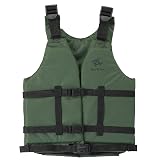
Reef Tourer snorkeling vest, sizes M and L (Amazon Japan)
The vest is a flotation aid made for snorkeling. It is not a certified life jacket. It comes in M and L, and Japanese sizes run small, so check the size chart before you order.
You get in over rock and reef, not sand, so protect your feet.

Reef Tourer marine shoes with toe guard (Amazon Japan)
This pair goes up to 28 cm, which is about a US men’s 10.
Parking, Showers and the Rules of the Lot
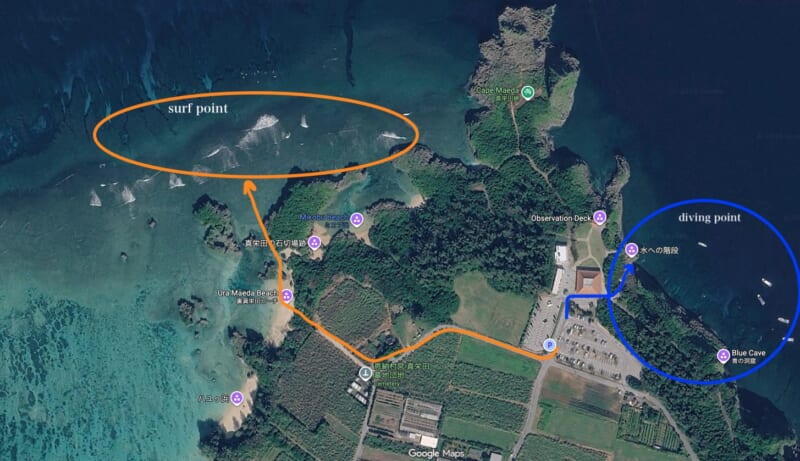
Everyone uses the same paid lot at the cape, whether you come with a tour or on your own.
- Parking costs 100 yen an hour. It is cash only. Bring 100 yen coins. According to the cape’s own English page, the machine does not take 2,000, 5,000 or 10,000 yen bills.
- The lot opens at 7 a.m. It closes at 7 p.m. from April to November and at 6 p.m. from December to March.
- Do not park along the road. Local residents ask every visitor to use the lot.
- A hot shower costs 200 yen for two minutes. Coin lockers cost 100 yen.
- The shower building closes at 6:30 p.m. from April to November, and at 6 p.m. from December to March. It also closes for cleaning from 4:30 to 5:30 p.m.
- No beach chairs or umbrellas in the lot, and no barbecues on the grounds.
These hours and prices are from the cape’s official site as of 2026. Check the official facility page, which is in Japanese, before you go.
When to Go
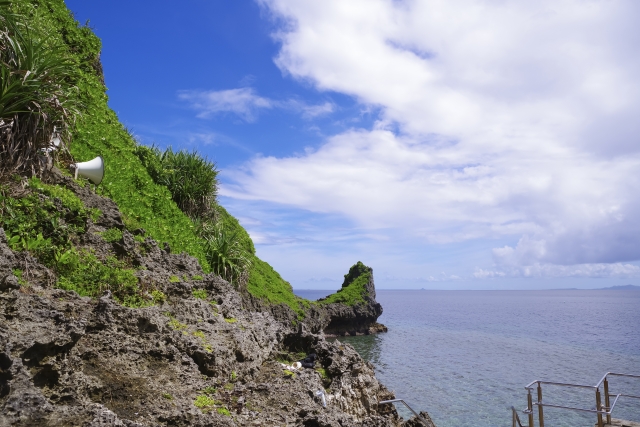
Whatever the month, go early. The first slots of the day have the fewest people in the water.
If the Cave Is Closed
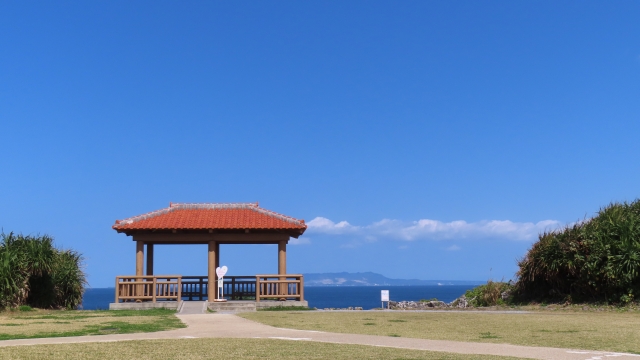
- If you booked a tour, the operator will offer another site or a refund. Check the policy on the listing.
- If you came on your own, do not go in. Walk out to the lookout over the East China Sea, and get something from the food stands.
- From February to the end of March, you can sometimes see humpback whales offshore from the cape.
- If you surf, a closed cave often means there are waves. Check the beach next door.
Summary
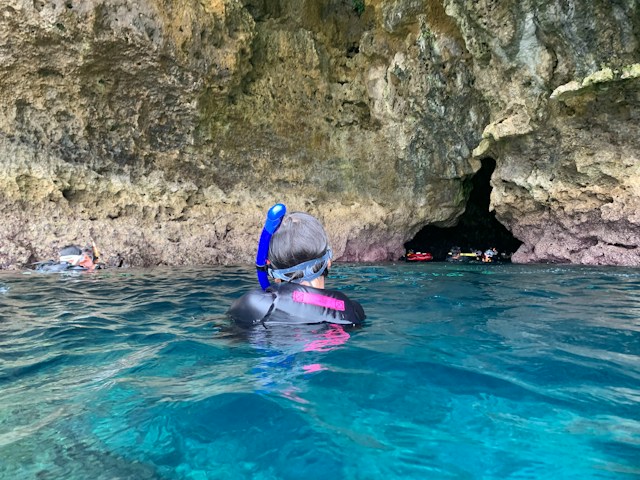
The Blue Cave is worth the drive, and it is worth doing safely. Check the flag, wear the float, and if it is your first time, let a guide show you the way in.
For the surf spot next door, see my Maeda Point Surf Guide. For jellyfish, reef cuts and currents, see Okinawa Surf Hazards.

コメント