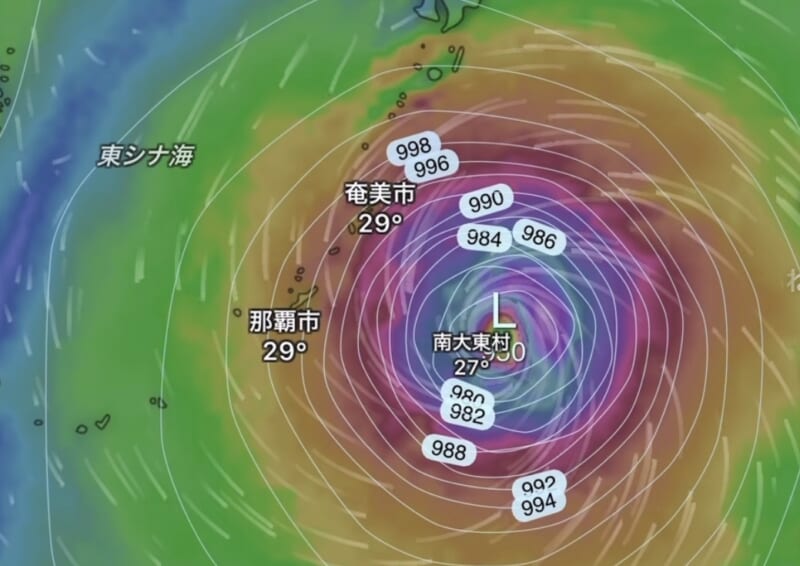
Typhoon season is when Okinawa gets its biggest and most powerful waves. It is also when surfers here get into the most trouble.
A typhoon hundreds of miles away can send clean, long lines of swell onto a reef under a blue sky. It looks like the day you have been waiting for. Then a set far bigger than everything else comes through, the current starts to pull, and a leash snaps.
I live in Okinawa and surf here all year. I have snapped a board in half on a typhoon swell, and I have been scared enough to get out of the water in under an hour. This guide covers when the season is, what a typhoon does to the surf, and how to decide whether you should be out there at all.
This page contains affiliate links. Buying through them supports this blog at no extra cost to you.
The Short Version
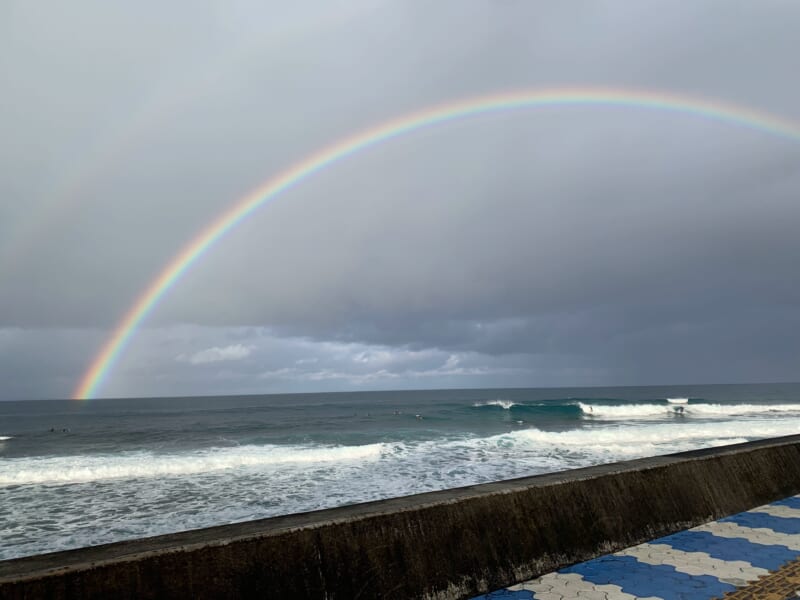
- The season runs from about July to October, with August and September at the peak.
- The best waves usually arrive before the storm does, while the sky is still clear.
- Typhoon swell is not normal surf. The sets are bigger, the lulls are longer and the currents are stronger.
- Beginners should stay out. Intermediate surfers should be very careful.
- Watch for much longer than usual before you paddle out, and check your leash.
- Choosing not to surf is a skill. On these days it is often the right call.
When Typhoon Season Is
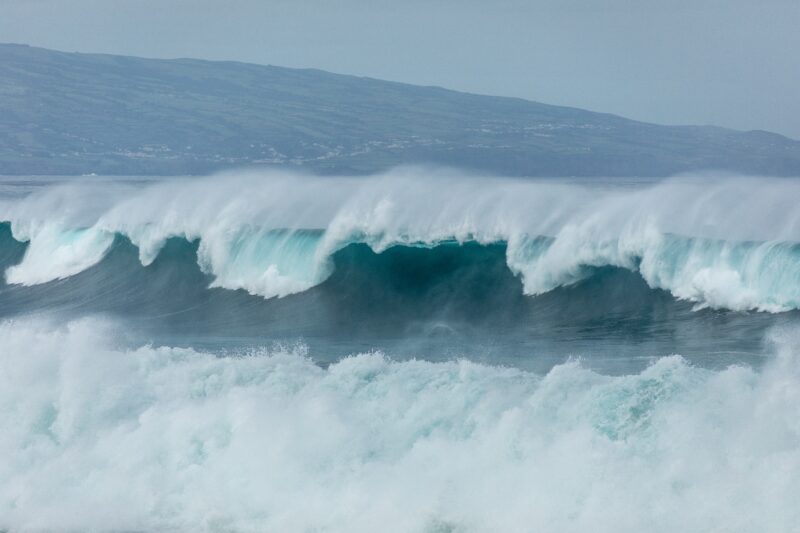
According to the Japan Meteorological Agency, about 25 typhoons form in the western Pacific in an average year. Seven or eight of them come close to Okinawa. Here is how those are spread through the year.
That works out to about two a month in August and September. Not every one brings good surf, and not every one hits the island. But from July to October there is almost always something to watch on the weather map.
What a Typhoon Does to the Surf
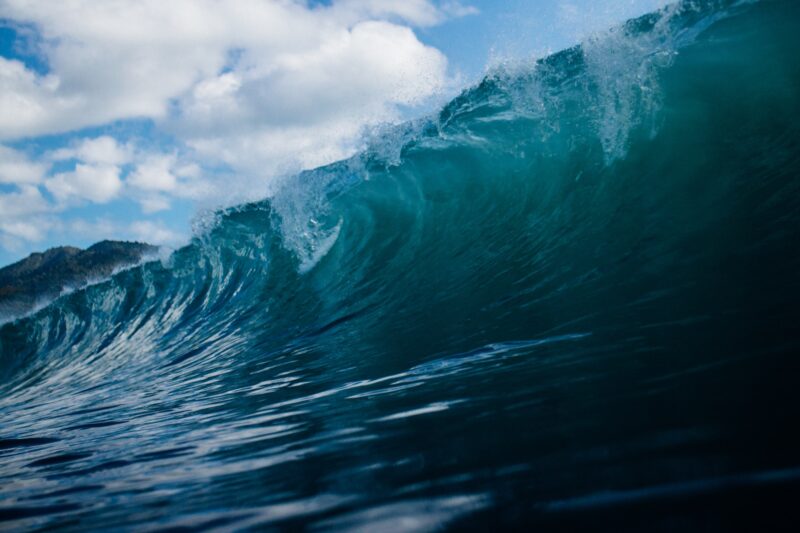
A typhoon changes the surf in three stages. Which stage you are in matters more than how strong the storm is.
A few things are specific to Okinawa.
- Flat spots wake up. The west coast is often flat in summer, but a typhoon swell can turn Sunabe into a serious wave overnight.
- Consistent spots get too big. Komesu Coast, the spot surfers call Suicide Cliffs, picks up swell all year. A typhoon often makes it too big to surf at all.
- The tide still rules. You still only have about two hours either side of high tide, and big tides make the currents stronger.
Why It Is More Dangerous Than It Looks
Typhoon swell fools people because the gaps between waves look calm. These are the five things that catch surfers out.
1. The sets
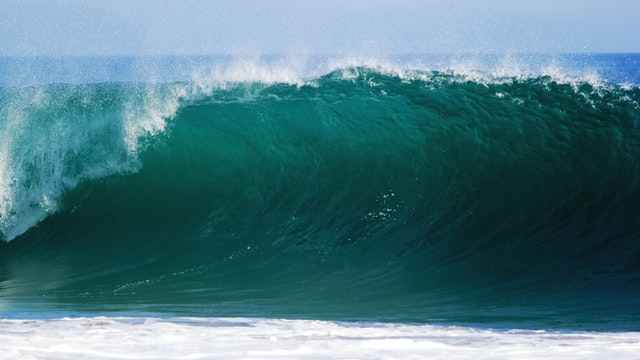
The waves come in sets, and on a typhoon swell the sets behave differently.
- The lulls are long. You can watch for several minutes and see nothing but small waves.
- The sets are huge. When they come, they are far bigger than everything in between.
So watch for much longer than you normally would before you decide. If you only watch for two minutes, you will see the lull and not the set. I learned how frightening those sets are as a beginner, the hard way.
2. The currents
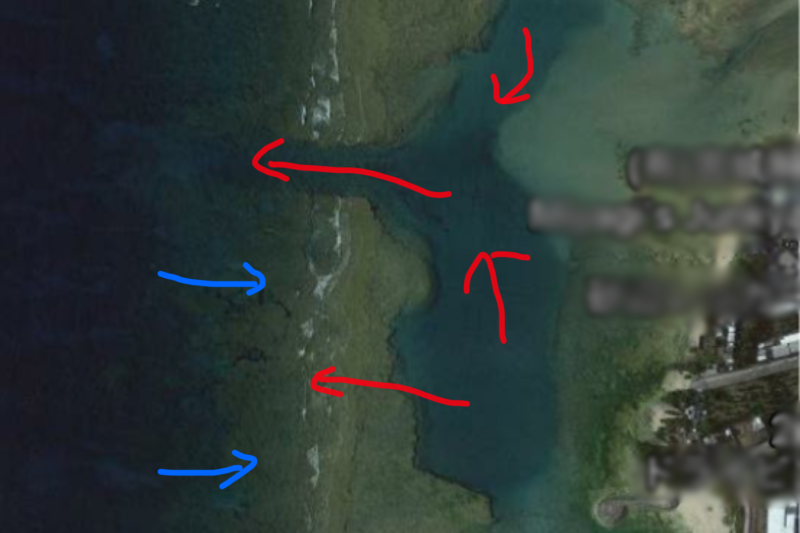
Bigger waves push more water onto the reef, and all of it has to go back out. The currents get stronger in step with the swell.
At some spots you have to paddle the whole time just to stay in place. Every typhoon season I hear of surfers who were carried out, could not get back, and had to be rescued by the coast guard.
I know the feeling. Paddling toward the beach as hard as you can and watching it get farther away is a special kind of fear.
3. The waves break in different places
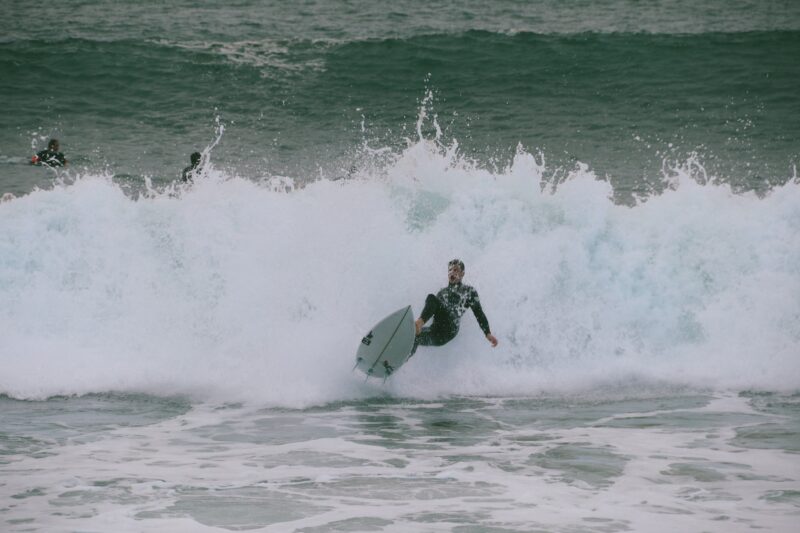
A big swell breaks farther out than usual, over parts of the reef that are normally just deep water. When people say it is “breaking way outside,” it has become an experts-only wave.
Before you go in, work out where people are sitting, where the waves are breaking, and where the water gets shallow. The spot you know on a normal day is not the same spot today.
4. Your gear fails
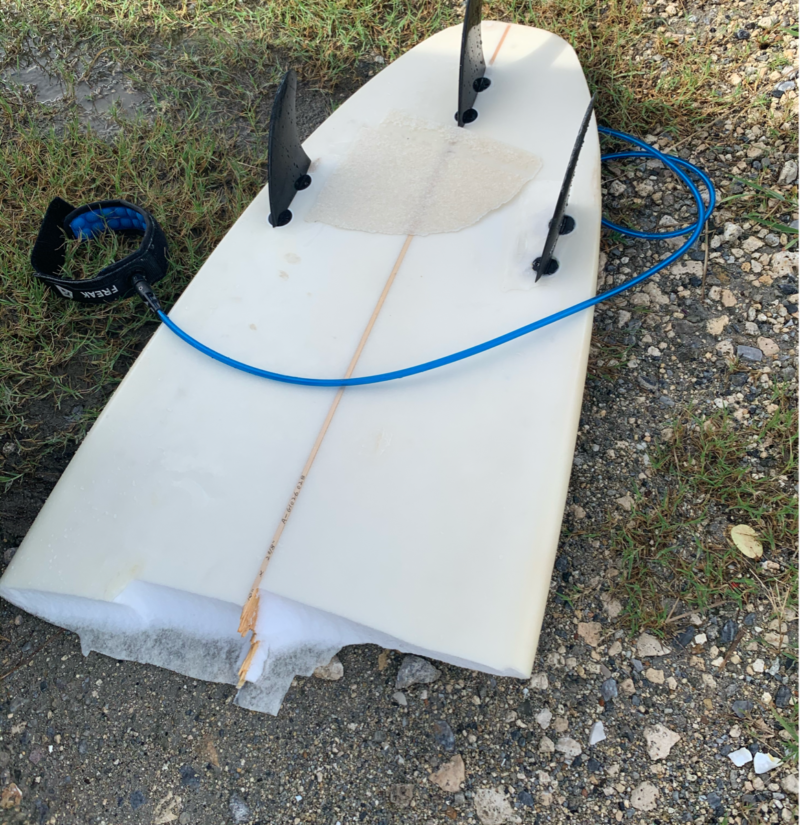
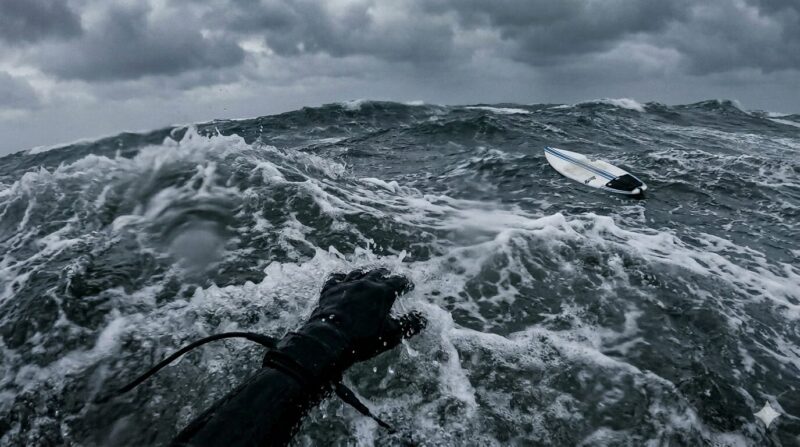
Typhoon waves carry far more power than everyday surf. That is my board in the photo. A typhoon swell snapped it clean in half.
Leashes go the same way. When I was three months into surfing, a leash that was only three months old snapped on a big day and left me swimming in the impact zone. A few days later I went to a surf shop and bought the thickest leash they had.
- Check the whole leash before every big session: the cord, the swivels, the cuff and the string that ties it to the board.
- Use a regular leash, not a thin competition one.
- Remember that a leash is not a lifeline. Any leash can break, new or old.

Beach Access premium light leash, 6 to 10 ft (Amazon Japan)

5. The weather turns fast
As a typhoon gets closer, conditions can change within a single session. The wind swings, the rain arrives, and the swell jumps in size.
Decide before you paddle out what will make you come in. If the sky darkens or the sets start getting bigger, go in right away.
Who Should Paddle Out
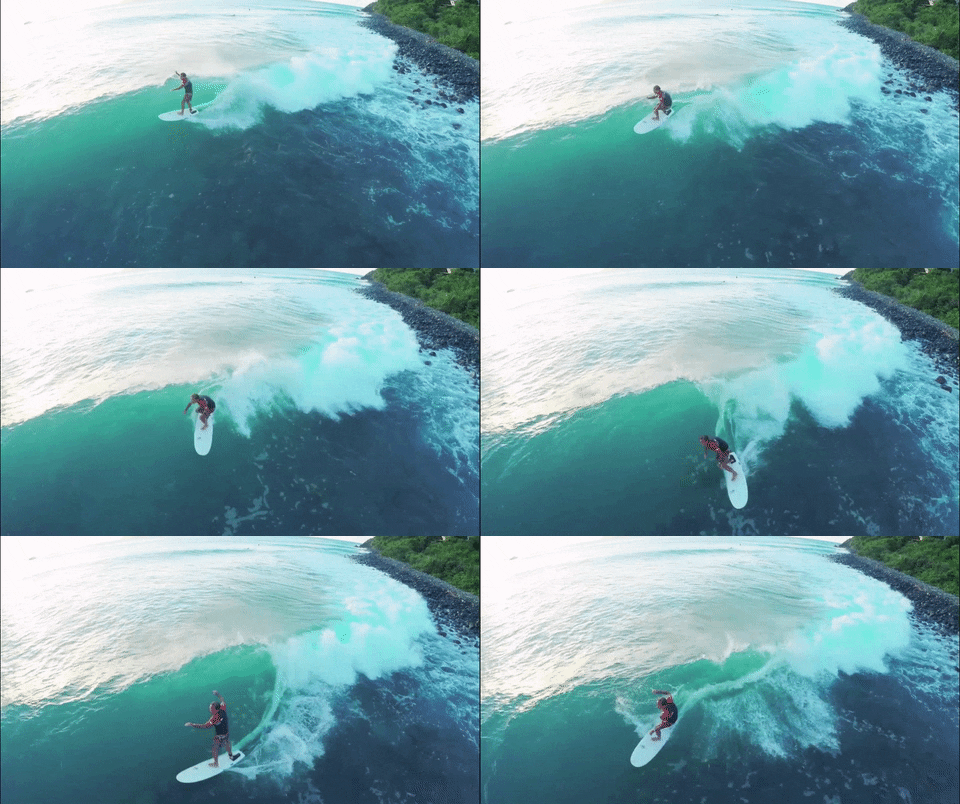
When I was new, I used to think, “The waves are a bit big, but I drove all this way, so I might as well go in.” That is exactly the thought that gets people hurt.
If something in you says it looks dangerous, listen to it. Deciding not to surf today is a real decision, and often the best one.
A big day is still worth the drive. At Sunabe the waves break close to the seawall, and watching from the top is a show in itself.
Parking and the layout of the wall are in my Sunabe Seawall Surf Guide.
Before You Paddle Out
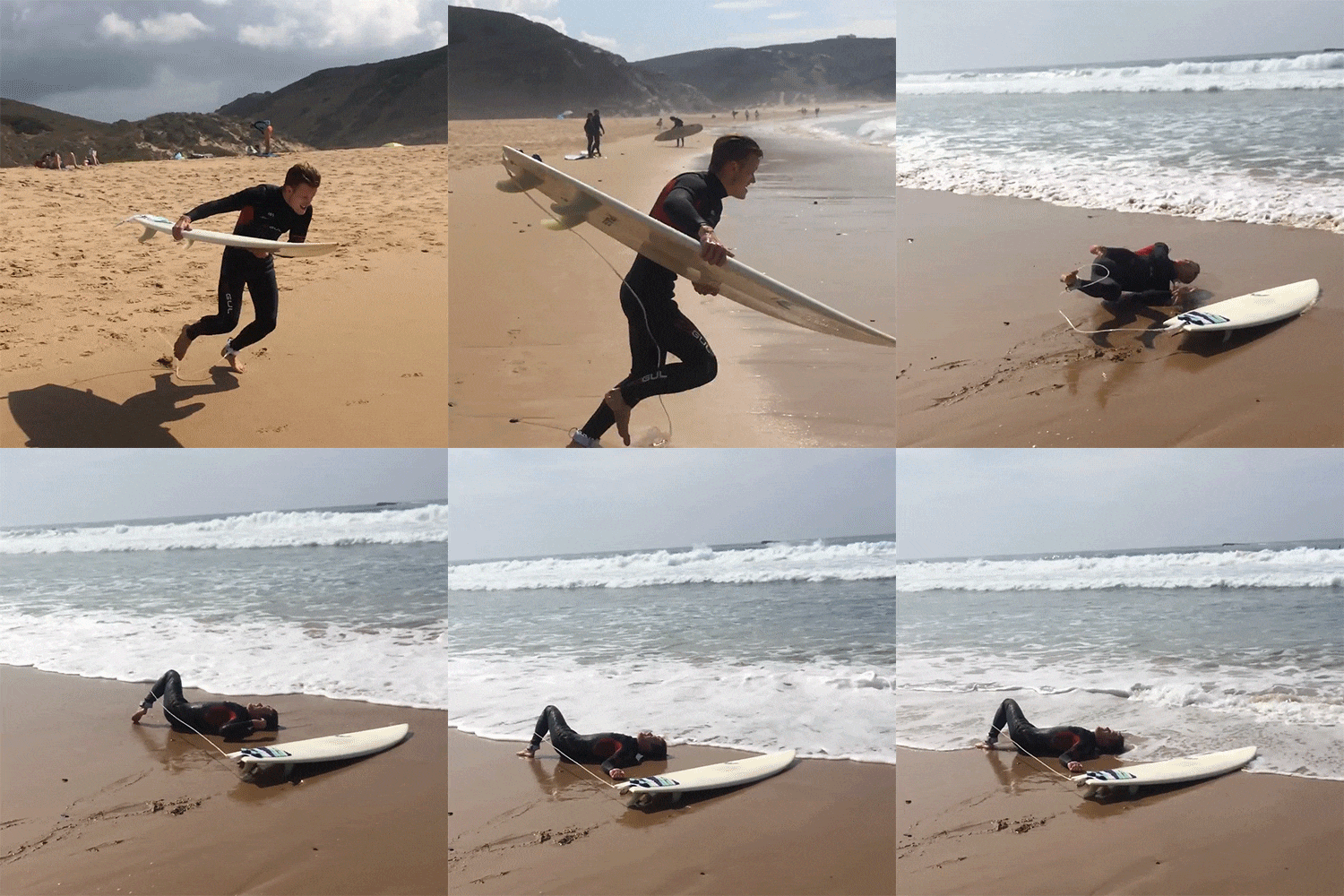
If You Get Into Trouble
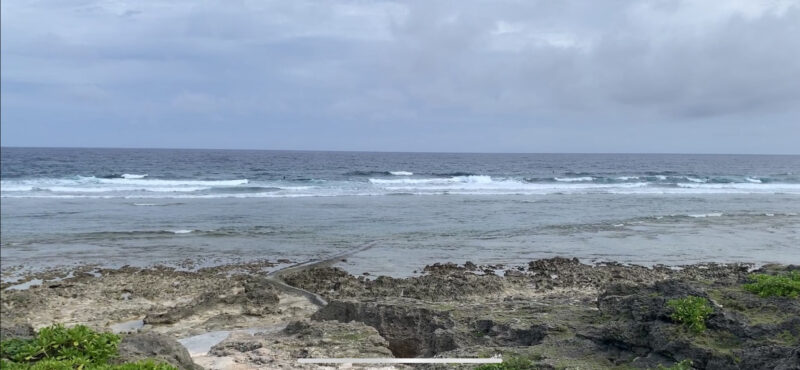
- Stay with your board. It floats. As long as you are holding it, you are not going under.
- Do not sprint. Panic paddling burns the energy you need. Stop, breathe and look around.
- Look for where the waves are breaking. Water moves toward the shore there. Flat, calm-looking water is often where the current runs out.
- Call for help early. Wave an arm and shout. It is better to be embarrassed than to be in real trouble.
I go through currents and the other hazards in detail in Okinawa Surf Hazards.
If You Are in the US Military: TCCOR and Sea Condition
I am not in the military, so treat this as a pointer and confirm it with your unit.
The 18th Wing at Kadena publishes a guide to its typhoon readiness levels, called TCCOR. In that guide, destructive winds means 50 knots or more, which is about 58 mph.
Two things matter for surfers.
- The good waves usually come early. Swell travels faster than the storm. The cleanest days are often the ones when TCCOR is still at a low level and the wind is light.
- At TCCOR 2 the sea condition goes to Danger. The same happens with wind of 35 mph or more. Under the 18th Wing water safety policy, Danger means water entry is prohibited.
You can check the current sea condition on Kadena’s Local Weather page. Other services have their own orders, so ask before you go.
After the Storm
The swell often hangs around for a day or two after a typhoon has passed. So do a few problems.
- The water can be brown and full of debris. Heavy rain washes soil and trash into the sea. Give it time to clear.
- Things have moved. Rocks, branches and fishing gear end up in the lineup and on the paths down to the water.
- Look after your boards. Bring them inside before a typhoon. A board left on a balcony or a car roof will not be there in the morning.
Summary
Typhoon season gives Okinawa its best waves of the year. It also takes boards, leashes and sometimes more. Watch longer than you think you need to, be honest about your level, and remember that there will be another swell.
For the rules of the lineup on crowded days, see Okinawa Surf Etiquette. For spots, tides and seasons, see Surfing in Okinawa: A Local’s Guide.

コメント