Most people know Cape Maeda for the Blue Cave. On a calm day the parking lot is full of dive vans, and the stairs down to the water are lined with people in rental wetsuits.
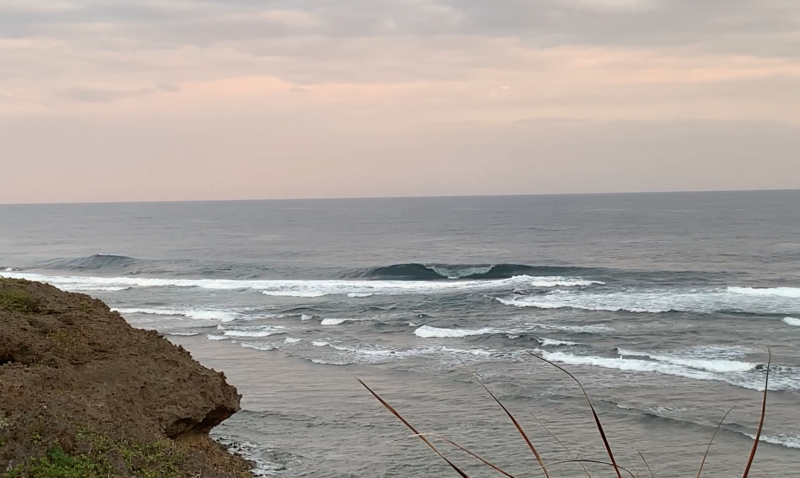
A short walk from that same parking lot there is a surf spot. In my experience it has the most hollow wave of the main spots on this island. It is also one of the few places in Okinawa where you can take a hot shower after you surf.
I live in Okinawa and surf here all year. This guide covers when Maeda works, where to park, the slightly unusual walk to the water, and why it is not a place to learn.
This page contains affiliate links. Buying through them supports this blog at no extra cost to you.
Maeda Point at a Glance
Where It Is and What to Call It
Cape Maeda is on the west coast, in Onna Village. From Naha Airport it is about an hour by car. From Sunabe it is roughly half an hour up the coast.
A note on the name. If you dive, you already know Maeda Point as the staircase down to the Blue Cave. Surfers use the same name for the wave, but the wave is not in the same place.
- The dive site is at the cape itself, down the stairs from the parking lot.
- The surf spot is at a small beach just south of the cape. On Google Maps it is labeled Ura-Maeda Beach.
So you park in the same lot as the divers, and then you walk a different way.
When It Works
Maeda needs three things at once: the right swell, the right wind and enough water.
Swell and wind
- Swell from the north. That is what this spot picks up.
- Wind from the southeast. It blows offshore here and keeps the wave clean.
- It often works when Sunabe is too small. If you check Sunabe and there is not enough to ride, this is the next place to look.
North swell comes mostly in the cooler months, the same season as Sunabe. The usual winter wind is from the north, which is not what you want here. The days to watch for are the ones when the swell is still running and the wind has turned to the southeast.
Tide
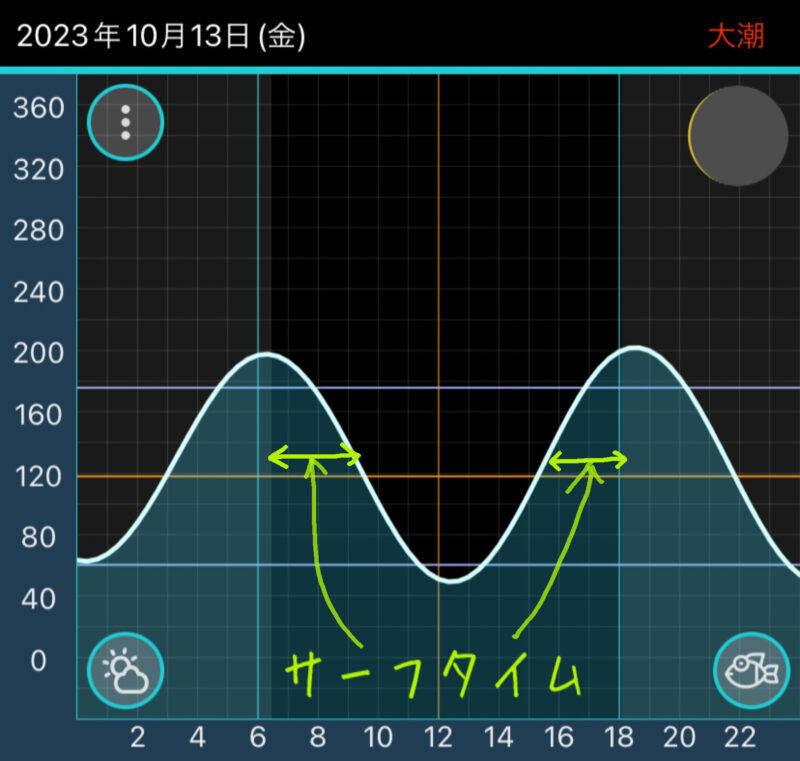
The rule is the same as everywhere in Okinawa. You have about two hours either side of high tide, and my rule of thumb is 120 cm or more on the Naha tide graph.
At Maeda the tide matters even more, because the wave is hollow. On days when the high tide itself is low, there is not much water over the reef even at the top of the tide. On those days, surf somewhere else.
The Wave
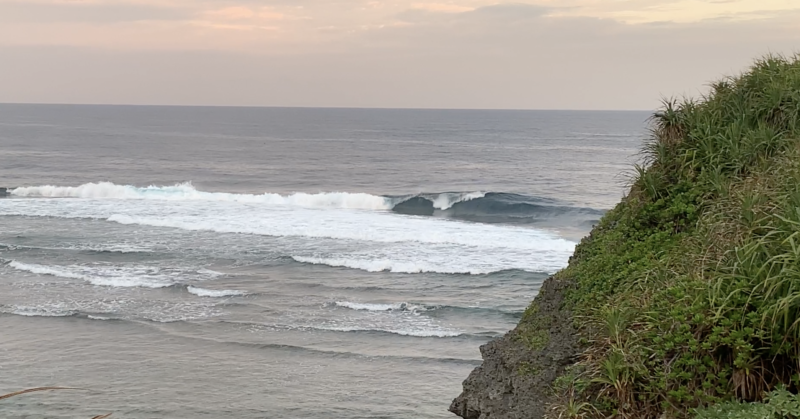
- It is hollow. Of the main spots on the island, this is the one where the wave throws the hardest.
- It has a strong character. The wave stands up suddenly and gets steep fast. You have less time to get to your feet than you do at Sunabe.
- There is current. The water moves along this stretch of coast, and on some days it is fast.
- The wave breaks over reef. You walk in over sand, but it is reef where you surf. Wear booties.

Reef Tourer marine shoes with toe guard (Amazon Japan)

This pair goes up to 28 cm, which is about a US men’s 10.
Who should surf it
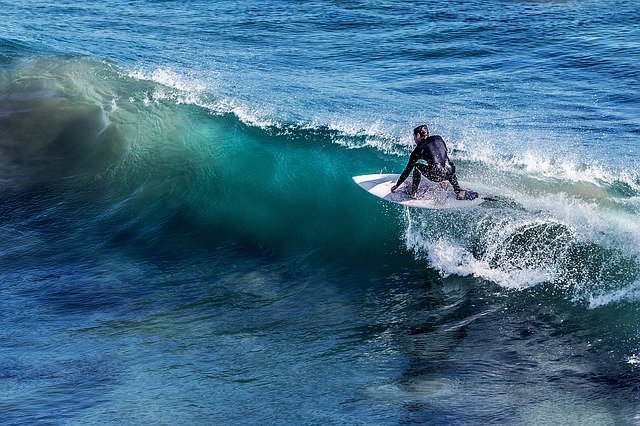
Maeda is for intermediate surfers and up. The fast takeoff and the current make it a hard place to learn.
If you are still learning and want to try it, choose a small day with a full high tide. On a shallow tide, do not go in. For your first sessions, the corner at Sunabe is a much better place. I explain why in my Sunabe Seawall Surf Guide.
Parking and the Walk to the Beach
This is the part that confuses people on their first visit. You cannot drive to the beach, and you should not park on the road near it.
The aerial photo below shows the route.
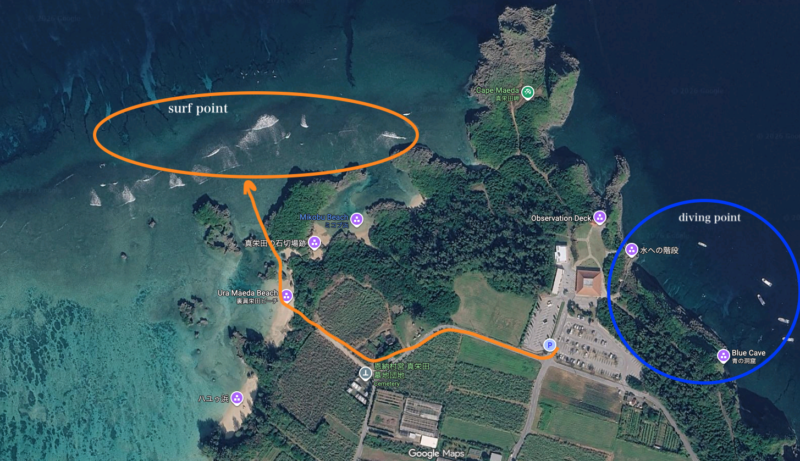
The parking lot
- It costs 100 yen an hour. For a surf spot with showers, that is a bargain.
- It is cash only. Bring 100 yen coins. According to the cape’s own English page, the machine does not take 2,000, 5,000 or 10,000 yen bills.
- It opens at 7 a.m. It closes at 7 p.m. from April to November and at 6 p.m. from December to March. There is no dawn session here, and you need to be out before closing time.
- Do not park along the road. Local residents ask every visitor to the Maeda area, including the beaches, to use the lot. Cars on the roadside get in the way of farm traffic.
- It is closed from January 1 to 3, and it can close when a typhoon is coming.
These hours and prices are from the cape’s official site as of 2026. They change from time to time, so check the official facility page, which is in Japanese, before you go.
Showers and the Rules of the Lot
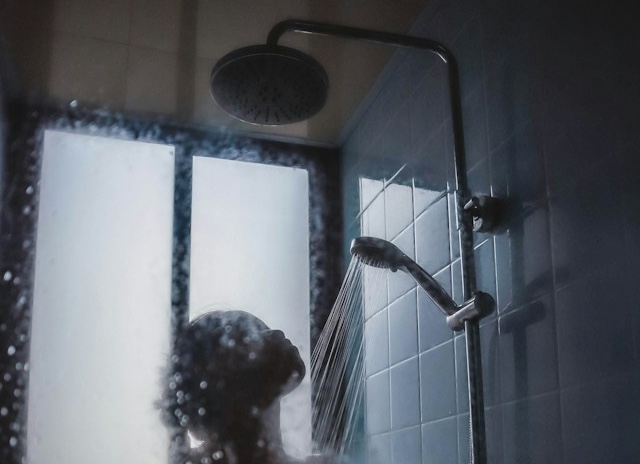
A hot shower after surfing is a rare luxury in Okinawa. Maeda has one.
- A hot shower costs 200 yen for two minutes. Bring more coins than you think you need.
- Coin lockers cost 100 yen. They are inside the shower building, along with changing rooms.
- The building is open from 7 a.m. to 6:30 p.m. from April to November, and to 6 p.m. from December to March.
- It closes for cleaning from 4:30 to 5:30 p.m. Plan your shower around that.
- Get your things out before closing. Once the building is locked, you cannot reach the lockers.
The lot also has rules that catch surfers out.
- No rinsing off with your own water tank in the parking lot.
- No washing boards or other gear there.
- No beach chairs or umbrellas in the lot, and no barbecues anywhere on the grounds.
At most spots in Okinawa, rinsing off next to your car with a jug of water is normal. Here it is against the rules. Use the showers.
On Flat Days, Go Under the Water
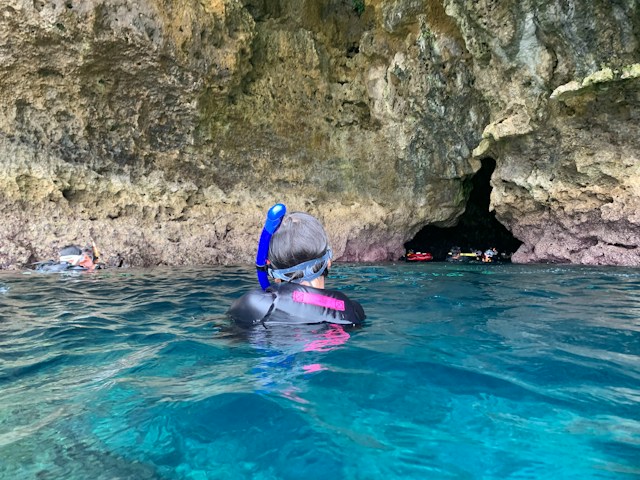
The swell that surfers want is the same swell that closes the Blue Cave. When the sea is flat, the cape belongs to divers and snorkelers, and it is worth joining them.
- Bring a mask and snorkel. The fish here come unusually close.
- The Blue Cave is reached from the stairs at the cape. The stairs are closed when the sea is rough.
- Check the status first. The cape posts whether swimming is allowed, with a live camera, on its sea status page.
- A life jacket or a flotation belt is required for snorkeling. That is the cape’s own rule.
- It is not a swimming beach. The cape warns that the current is fast, especially around low and high tide.
If it is your first time, book a guided snorkel or dive tour. The guides know the entry, the cave and the current.

Reef Tourer mask and snorkel set with mesh bag (Amazon Japan)
For the float, a snorkeling vest is the usual choice.
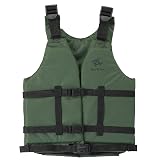
Reef Tourer snorkeling vest, sizes M and L (Amazon Japan)
The vest is a flotation aid made for snorkeling. It is not a certified life jacket. It comes in M and L, and Japanese sizes run small, so check the size chart before you order.
Even on a surf day, the cape is worth ten minutes. There is a lookout over the East China Sea, and the food stands sell taco rice, pork and egg rice balls and Blue Seal ice cream. From February to the end of March you can sometimes see humpback whales offshore.
When Not to Surf Here

- On a shallow tide. A hollow wave over shallow reef is how people get hurt.
- When the current is running hard. If you are paddling just to stay in place, go in.
- On a typhoon swell. It gets heavy fast. I cover those days in Typhoon Swell in Okinawa.
- If you are a beginner. Come and watch, snorkel on a flat day, and surf Sunabe.
If you are in the US military, check the sea condition for the west coast on Kadena’s Local Weather page before you go.
Summary
Maeda gives you two reasons to drive to Onna. When there is north swell and a southeast wind, bring your board. When it is flat, bring a snorkel. Either way, bring coins.
To work out which coast to drive to on any given day, see How to Read the Surf Forecast in Okinawa. For the other main spots, see Surfing in Okinawa: A Local’s Guide.

コメント