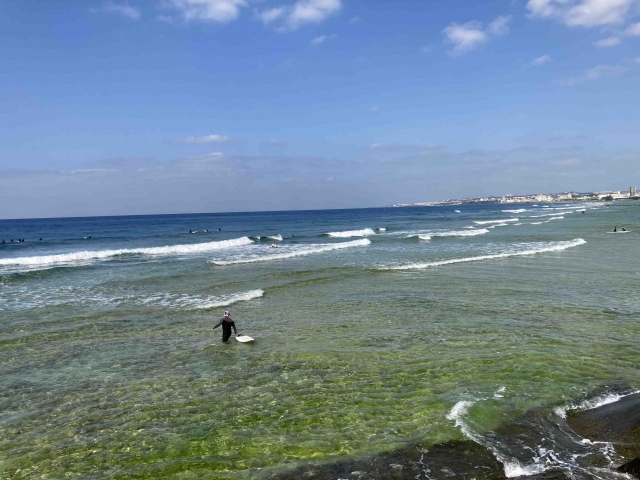
If you surf in Okinawa, you will end up at Sunabe sooner or later. It is the easiest spot on the island to reach, the easiest to get in and out of, and the one place where a beginner can stand on the bottom while learning. It is also close to Kadena Air Base, Camp Lester and Camp Foster, which is why you hear so much English in the water there.
It is not always easy, though. On the wrong tide there is no water over the reef. On a big swell it turns into a serious wave. And on a good day half the island shows up.
I live in Okinawa and I have surfed Sunabe more times than I can count. This is everything I know about it: when it works, where to paddle out, where to park, and when to stay on the wall and watch.
This page contains affiliate links. Buying through them supports this blog at no extra cost to you.
Sunabe at a Glance
Where It Is and What to Call It
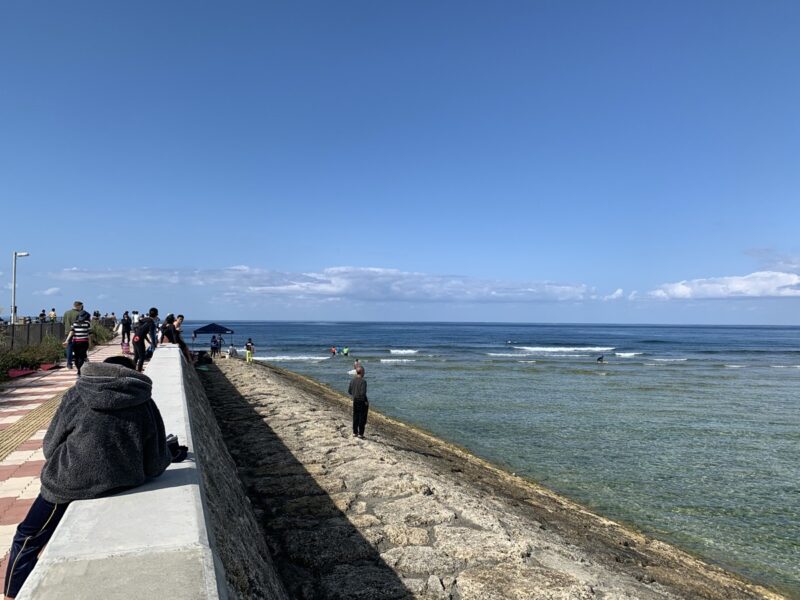
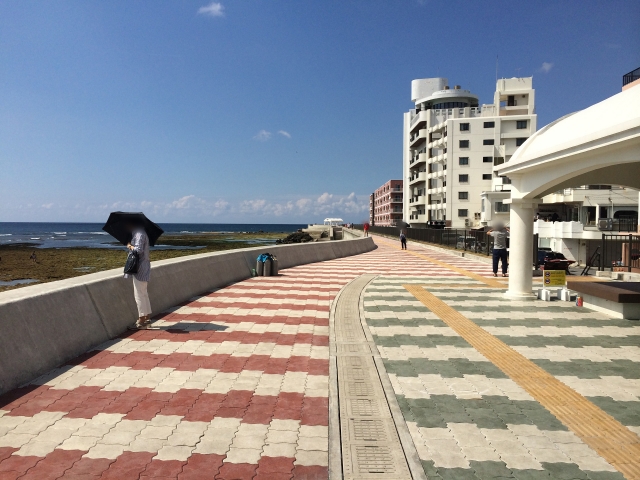
Sunabe Seawall is a long concrete seawall on the west coast, in Chatan Town. It faces the East China Sea, with houses, cafes and dive shops right behind it.
A note on the name. On Japanese maps this stretch is Miyagi Coast, and Japanese surfers call the spot Sunabe. English speakers call it Sunabe Seawall, or just the Seawall. They are all the same place.
From Naha Airport it is about 45 minutes to an hour by car, depending on traffic.
At one end of the wall is Sunabe Baba Park, with a lawn, a lookout, a playground and a skate park. The park also has a monument marking this coast as the place where US forces first landed on Okinawa’s main island in 1945. It is worth a quiet minute before or after you surf.
When It Works
Three things decide whether you can surf Sunabe: the season, the tide and the wind.
Season
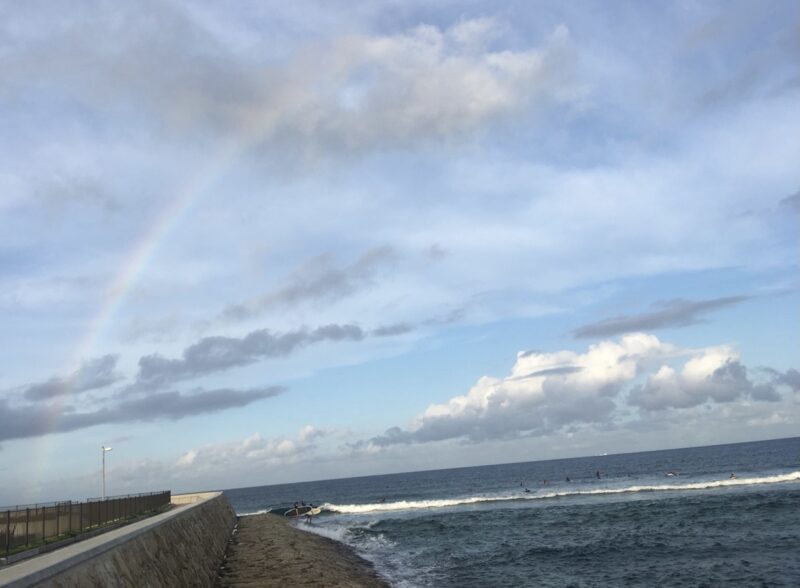
Sunabe is a winter spot. If you start surfing in June and wonder why it is flat every time, that is normal. Come back in November.
Tide
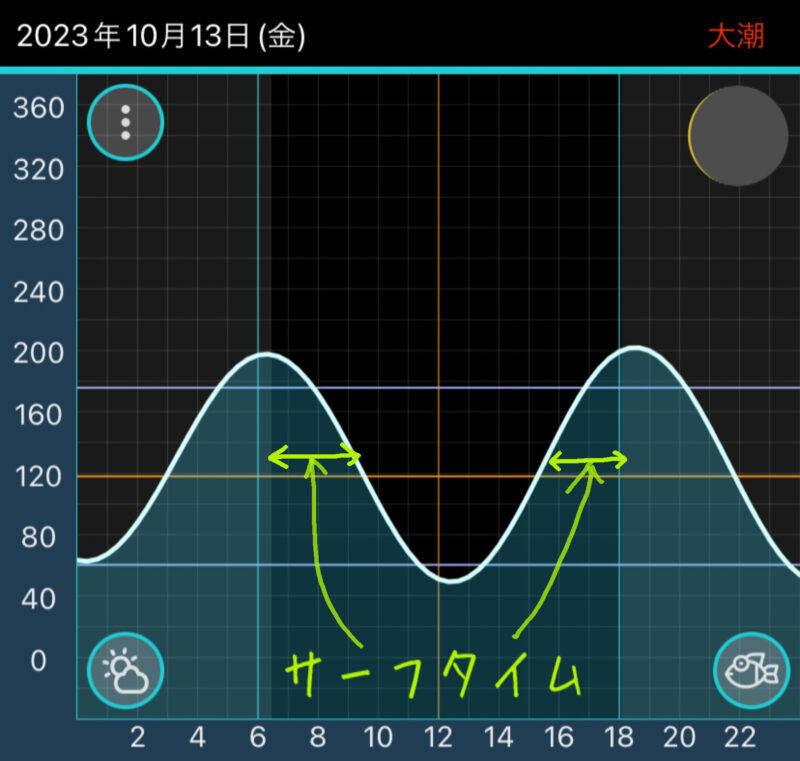
The reef here is shallow. You can only surf for about two hours either side of high tide. At low tide the reef is out of the water.
- Check the Naha tide graph before you leave the house.
- My rule of thumb is a tide of about 120 cm or more. Some sites show that as 1.2 m. It is roughly 4 feet.
- On the biggest tides of the month, the high tide falls close to sunrise and sunset. Those days give you a window of about two and a half hours at dawn and another at dusk.
The window moves every day, so you cannot surf at the same time all week. Plan your session around the tide, not your schedule.
Wind
The wall faces west. Wind from the east blows offshore and keeps the waves clean. Strong wind from the west or northwest blows straight onto the reef and turns it messy.
For how to check the tide, wind and swell before you drive, see How to Read the Surf Forecast in Okinawa.
Where to Paddle Out
There are several peaks along the wall. Which one you choose depends on your level.
Beginners: the corner near Baba Park
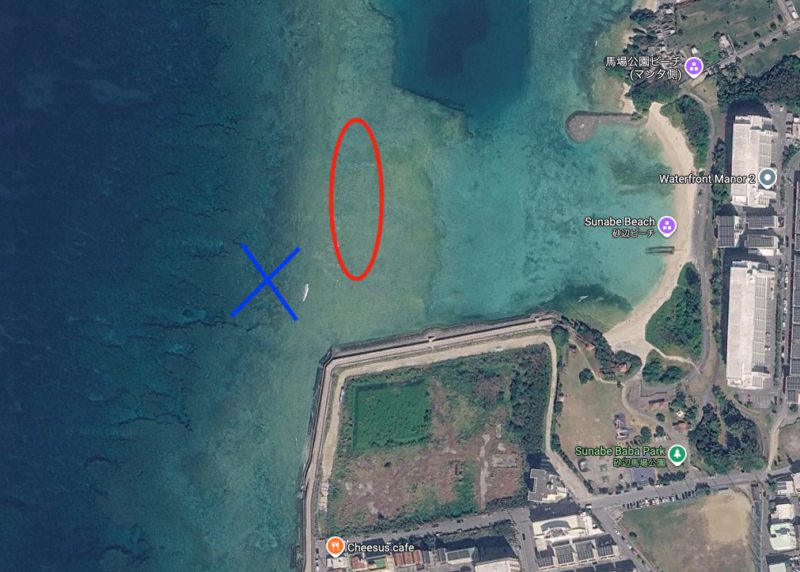
This is the spot I recommend to everyone who is learning.
- The waves break close to shore. You do not need a long paddle.
- On a small day you can stand on the bottom in most of that area.
- Surf schools use it, which tells you it is the gentlest part of the wall. Give the lessons some room.
It is still reef under your feet. If you do not want to walk back to the car with bleeding feet, wear reef booties. For beginners they are close to essential.

Reef Tourer marine shoes with toe guard (Amazon Japan)

One note on sizes: this pair goes up to 28 cm, which is about a US men’s 10. If your feet are bigger, look for surf booties in US sizing.
Experienced surfers: the other peaks
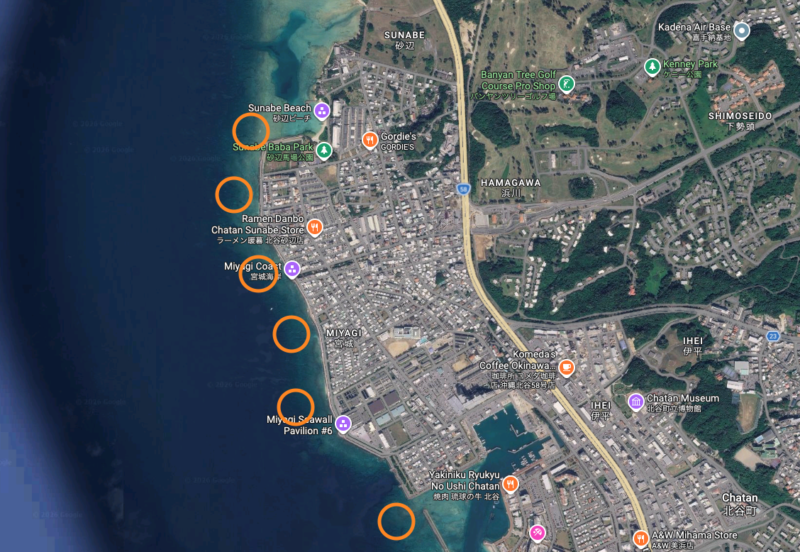
The peaks farther along the wall break harder and attract better surfers. Watch from the wall for ten minutes before you choose one. See where people are taking off, where they get out, and how fast the water is moving along the reef.
If Sunabe is too small, experienced surfers can check Maeda Point, about half an hour up the coast. I cover it in my Maeda Point Surf Guide.
Getting in and out
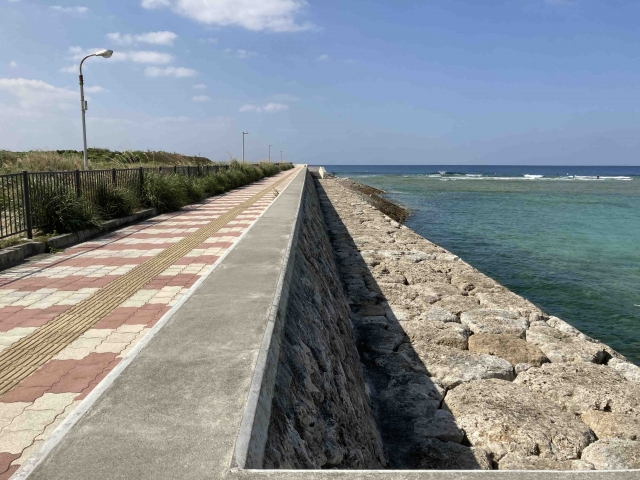
Steps are built into the seawall, so you can walk down to the water without climbing over rocks. Divers and snorkelers use the same steps. Look for dive floats and people surfacing before you paddle across.
Parking
Parking is free along the seafront road, in the spaces next to the wall.
- It fills up when the waves are good. On a clean winter weekend, come early.
- Do not block driveways or double-park. People live right behind the wall, and the same neighbors see surfers every single day.
- Keep it quiet at dawn. Car doors and voices carry.
- Do not hide your key on the car. An electronic key cannot go in the water. A small combination lockbox on the car is the method I trust.

Sanwa Direct 4-digit combination key lockbox (Amazon Japan)
There are no changing rooms on the wall, so bring a poncho or a large towel, and bring fresh water to rinse off.
The Crowd
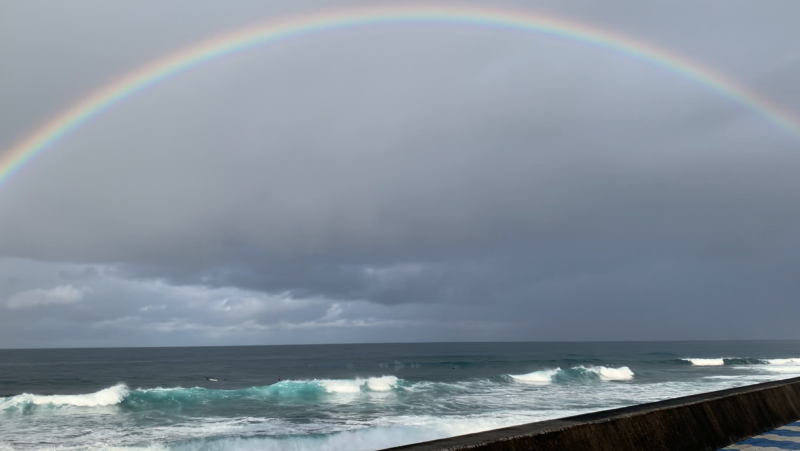
Sunabe is one of the two most popular spots in Okinawa. When it is good, everyone is there: local regulars, American surfers, surf schools, and people who drove across the island.
- Beginners should stay in the corner and out of the main peaks until they can control their board.
- Take turns. A reef has one take-off spot per peak, so the lineup only works if people wait.
- Say hello. It is a small community and you will see the same faces all winter.
I wrote the rules out in full, with a diagram of who has priority, in Okinawa Surf Etiquette.
When Not to Surf Here
- At low tide. There is not enough water over the reef. Wait for the window.
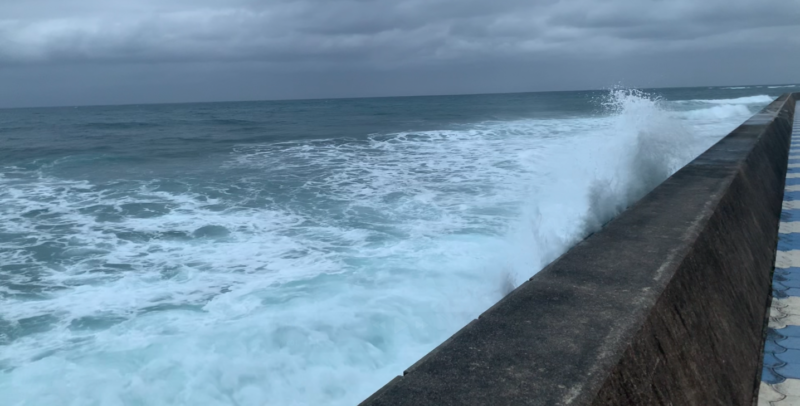
- On a typhoon swell or a large groundswell. Sunabe turns into a heavy wave with strong currents. If you are a beginner and it looks big, stay out.
- When you are the only one out. If nobody else is in the water at the island’s most popular spot, there is usually a reason.
A big day is still worth the drive. The waves break close to the wall, and watching from the top is a show in itself.
For how typhoon swells work and who should be out there, see Typhoon Swell in Okinawa: When to Surf It and When to Stay Out.
If you are in the US military, check the sea condition for the west coast before you go. I explain how that works in How to Start Surfing in Okinawa.
Lessons and Rentals
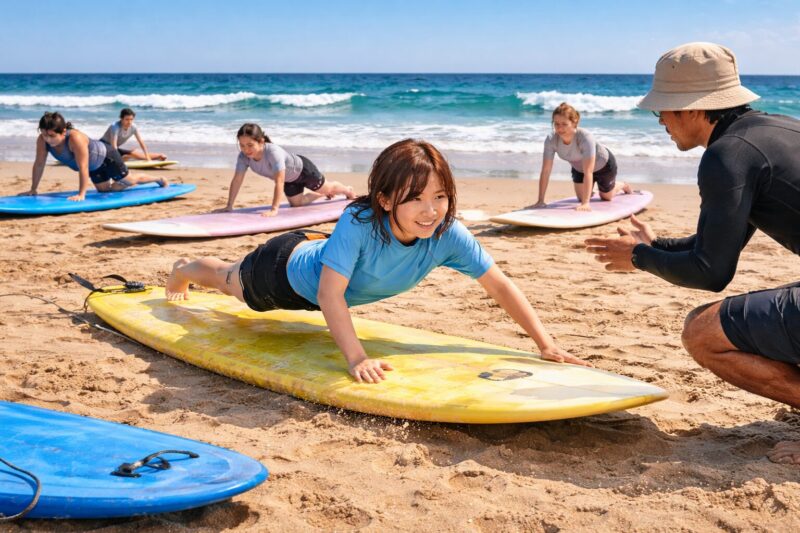
There are a lot of surf shops within walking distance of the wall. In my experience the people who run them are friendly, and many offer lessons and guiding.
- A beginner lesson costs very roughly 9,000 to 10,000 yen with all the gear included.
- Renting a board and wetsuit runs around 10,000 yen for a full set.
- Ask the shop which peak is working today and when the tide window is. That advice is worth more than the board.
If you have never surfed, start with a lesson here. It is the fastest and safest way in.
After Your Session
Stay for the sunset
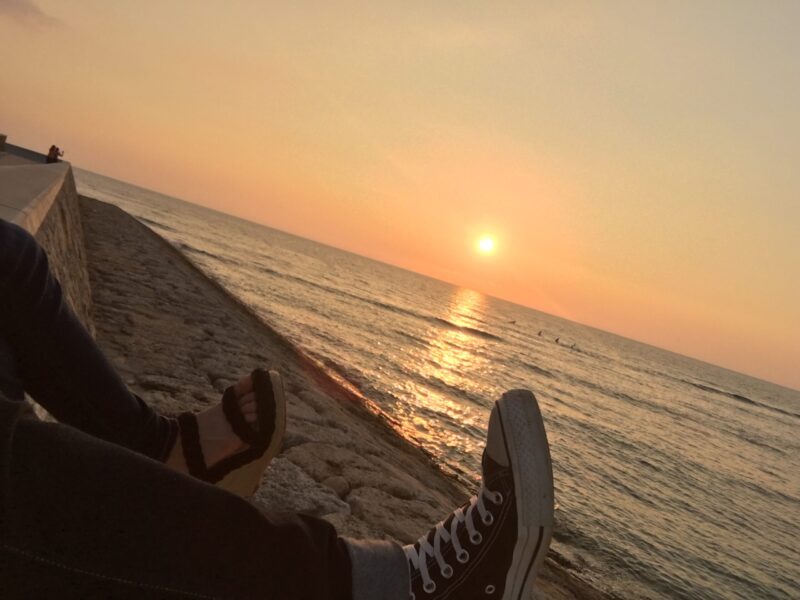
The wall faces west, so the sun drops straight into the sea in front of you. Sitting in the water on an evening high tide and watching it go down is one of the best things about living here.
Eat Okinawa soba
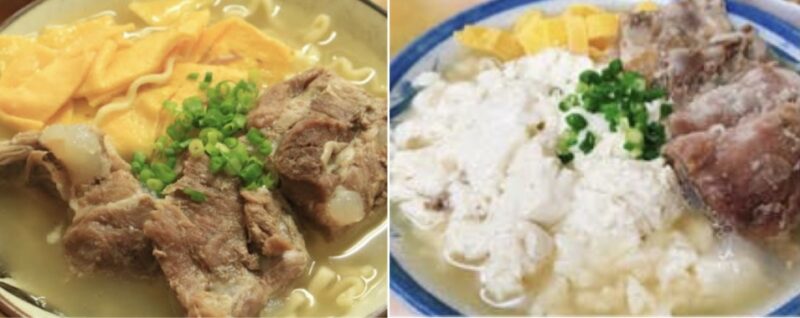
Hamaya is a well-known Okinawa soba shop a short walk from the wall. If it is your first time, order the regular soba. If you want something different, try the yushi-dofu soba, which comes with soft, fresh tofu on top. It is a daytime shop, so check the hours and go after a morning session.
Cafes
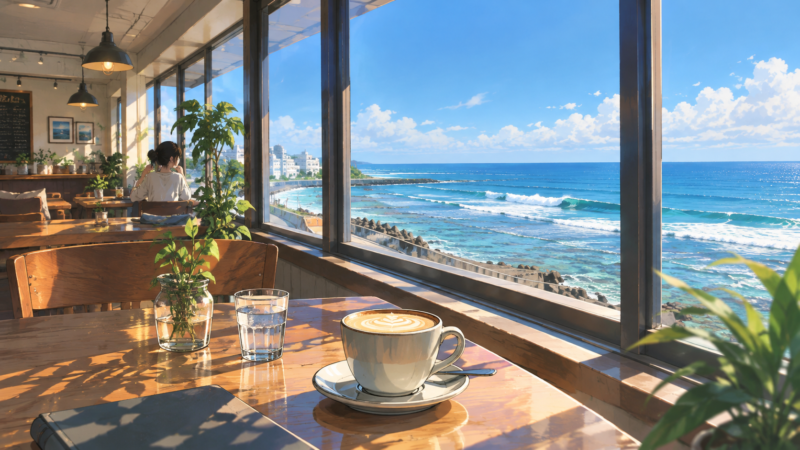
The streets behind the wall are full of cafes. Some feel very American, some are surfer hangouts, and a few open early enough for coffee after a dawn session. I will not list them, because they change. Walk around and find your own.
Summary
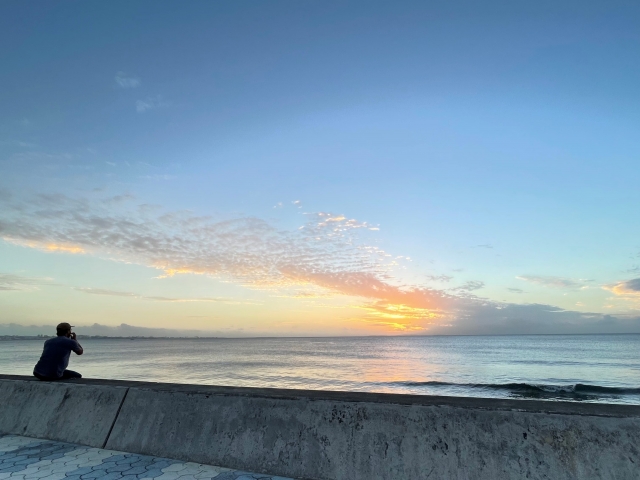
Sunabe is where most people on this island catch their first wave, and where plenty of them are still surfing years later. Learn its tide, respect its crowd, and it will be your home break too.
For the other main spots, see Surfing in Okinawa: A Local’s Guide. For what to wear in each month, see Do You Need a Wetsuit in Okinawa?

コメント